Journal of Biology and Medicine
Sex Addiction, Conception and Treatment
Department of Social Psychology and Anthropology, Faculty of Psychology, University of Salamanca, Spain
Author and article information
Cite this as
Martin Herrero JA. Sex Addiction, Conception and Treatment. J Biol Med . 2026; 10(1): 14-30. Available from: 10.17352/jbm.000051
Copyright License
© 2026 Martin Herrero JA. This is an open-access article distributed under the terms of the Creative Commons Attribution License, which permits unrestricted use, distribution, and reproduction in any medium, provided the original author and source are credited.Introduction and Objectives: This article addresses sexual addiction by integrating an anthropological and psychological approach to analyze the experiences of the addict. The objective is to evaluate the effectiveness of a therapeutic intervention model designed by the author to treat this disorder.
Materials and Methods: A mixed-methods approach with a cross-sectional pretest-posttest design was used. Fifty subjects (25 men and 25 women) who sought help participated, divided equally between an experimental group and a control group. Ethnographic interviews and the standardized questionnaires Pathos, CSBI, Sast-R, and Stai (E-R) were used to measure severity, life interference, impulse control, and anxiety.
Results: addiction negatively interferes with daily routines, generates anxiety, and acts as an escape from stress, regardless of age or social class. Both sexes showed similar symptoms, although women showed greater difficulty in controlling impulses. The posttest phase revealed a highly significant decrease in the severity of addiction following therapy.
Conclusions: The study confirms the effectiveness of the proposed program, demonstrating its utility in reducing anxiety, improving the ability to delay immediate gratification, and decreasing compulsive sexual behavior as an escape mechanism.
This study examines sex addiction from an anthropological and psychological perspective (following current trends in addiction science with biopsychosocial approaches). Anthropology in the field of addiction allows us, through its holistic approach, to analyze problems from both the emic perspective (the informant's, in this case, addict's) and the etic perspectives, thereby describing and explaining this issue in concrete terms. Analyzing the experiences and reasoning of people with dependency issues is fundamental to understanding their addictive behavior. We must understand the addict's motivations, habits, beliefs, etc., to arrive at a deep understanding of the problem. They are not simply addicts, drug-dependent individuals, junkies, or a population facing or at risk of social exclusion; they are people with problems whom we must and can help. As anthropologists, we cannot continue to look the other way, because there is a segment of the population that is suffering and we have the tools to decipher the cultural keys that lead to onset and maintenance of addictions, whether substance-related or not.
It is essential to understand the profile of the people we will be working with to ensure effective intervention. This is the objective of Anthropology applied to health. It is vital to understand the reality we face, asking ourselves not only why, but also for what purpose, for whom, and from there, how; hence the importance of fieldwork and direct contact with people from these groups. I understand that this is the meaning of anthropological fieldwork.
Through this ethnography, we have had continuous and intense interaction with the studied group in their natural environment, which allowed us direct and immediate access to data about this microsocial reality. We have learned to interpret their behaviors in terms of their own culture and values (where it is common to find ways of thinking that clash head-on with our way of understanding of life in our time; for example, it is not unusual to hear them say that there is nothing wrong with having a party every six or seven months in which one, after months of effort, treatment, and work, deserves a reward in the form of a celebration with alcohol, gambling, drugs, and sex). We view addicts not as walking labels, but as people with whom we interact and establish relationships, which has allowed us to move beyond prevailing prejudices or categories to better understand the logic behind their actions.
We understand addictions as a reaction to a distressing and stressful social reality. We know that our society offers a way to alleviate this distress without having to face reality, through the use of addictive behaviors. This reality is characterized by a tendency toward hedonism (the quick, easy, and immediate relief from most sources of discomfort). The world of addictions is not alien to this reality; but is an active part of it, an overwhelming and disconcerting reality in which leisure and recreation through drugs, sex, shopping... play an increasingly dominant role as a "form of escape and entertainment", which is particularly alarming among adolescents and young adults. Drugs or other addictive behaviors allow the user to create an illusion of independence from reality, enabling them to cope with social pressures without altering that reality in search of a solution to their anguish. Are addictions a culturally regulated behavior? Why the heroin boom of the 1980s? Will gambling and sex addiction be the addictions of the future? At the 9th World Congress of Addiction Medicine and Psychiatry, held in May 2026 in Prague (Czech Republic), the answer was almost unanimously yes. I understand that answering these questions is the task of applied anthropology in health.
In addition, pleasure is a fundamental concept for understanding the onset, continued use, and subsequent maintenance of addictive behavior. Pleasure is a practically forgotten topic when discussing addiction. For the addict, pleasure becomes an object of necessity, something that cannot be missing. These people are not slaves to drugs, sex, prostitutes, gambling, etc., but they are slaves to pleasure, to dopamine. They become dependent on increasingly pleasurable sensations, causing the brain to release ever greater amounts of dopamine, which in turn prove insufficient to reach the desired level or subjective sensation of pleasure. I call them "dopamine-dependent." I know the word doesn't exist... [1].
Framework and theoretical foundations of sex addiction. George et al. asserted that addiction is a primary and chronic brain condition that stimulates circuits associated with reward, motivation, and memory. We know that a person who pathologically and compulsively seeks reward and/or relief from discomfort through substance use or other behaviors reflects a dysfunction in the brain's reward circuits [2].
Carnes [3] described a common pattern between substance addictions and behavioral addictions, characterized by a loss of control over the behavior, continuing the behavior despite the negative consequences it causes, and an obsession with repeating it even while aware of the harm it causes. Furthermore, this type of addiction, like substance addictions, entails:
- Tolerance: the person needs to increase the frequency and intensity of sexual behavior as the condition progresses to achieve the effects they had at the beginning of the addiction.
- Dependence, a state of adaptation that makes the addict need to carry out their behaviors (masturbation, sexual fantasies, etc.) to obtain pleasure and/or avoid the distress that would result from not performing the behavior.
- Withdrawal: physical and psychological discomfort that appears when the problem behavior decreases, ceases, or is extinguished.
Current research emphasizes the addictive potential of sex based on the brain circuits and neurotransmitters involved in the experience of reward and gratification; the existing scientific literature increasingly describes hypersexuality as a behavioral addiction [4]. Cismaru-Inescu et al. indicated that "sexual addiction or dependence is characterized by hypersexuality, impaired regulation of sexual desire, and compulsivity, including engaging in sexual intercourse with excessive and uncontrolled frequency (5 to 15 sexual acts per day for more than 6 months, starting at age 15)". They indicated that "addictive processes affect three behavioral domains: motivation-reward, affective regulation, and behavioral inhibition. They suggested that sex addiction may present psychiatric comorbidities with anxiety disorders and/or mood disorders" (2013: p. 354).
Carol Coleman-Kennedy et al. stated in 2002 that as many as 20 million people in the United States were affected by sex addiction (2002: 143). This figure rises to 8.3% in the 2018 study by Janna A. Dickenson, Michael H. Miner, Eli Coleman, et al.; therefore, the current prevalence is estimated to be around 23 million people. It is, therefore, an addiction that we must explore more deeply and understand better, since many mental health professionals are treating it as a substance addiction, and it is not the same. In my opinion, we must differentiate between the two mechanisms that underlie the development of this addiction:
"Compulsion is based on the principles of dependence, need, and desire, and is more directed toward reducing anxiety than obtaining pleasure; that is, it is negatively reinforced. In addition, components related to anxiety reduction and the pursuit of pleasure are present. In other words, it combines both impulsive and compulsive behaviors, as well as positive and negative reinforcement" (Oliva et al., 2014, p. 88). This is a very peculiar and specific behavioral addiction, embedded in a society of immediate pleasure and easy gratification. As a graphical representation, the cycle of a behavioral addiction can be seen in Figure 1.
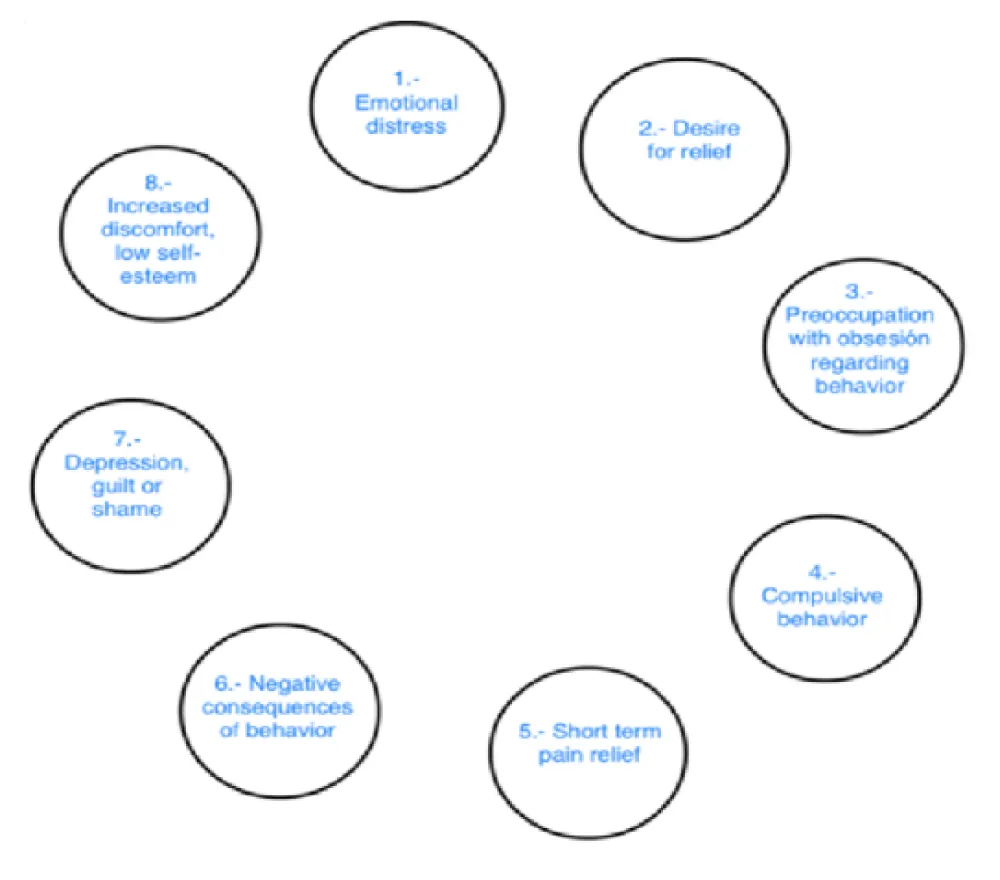
Sexuality is inherent to human beings; it is one of the most pleasurable and natural activities we engage in and one of the characteristics with the greatest variability within the human species. Each person experiences their sexuality in a different way. However, there are sexual behaviors that, due to their compulsive nature and persistence despite the negative consequences they cause (traits characteristic of addiction), can generate problems in all areas of an individual's life. Sex addiction, hypersexuality, compulsiveness, or uncontrolled sexual preoccupation and behavior (Chiclana et al., 2015) involves the development of uncontrollable sexual behaviors used to produce self-gratification. We know that any substance and/or activity that generates pleasure can cause addiction. Few activities generate as much pleasure as sexual intercourse.
In men, this addiction is known as satyriasis, which refers to the Greek word "satyr," meaning phallic deity, and the suffix -iasis, meaning disease. In the case of women, it is referred to as compulsive sexual behavior in women. This distinction used to refer to the same symptoms is exclusionary, discriminatory, and even derogatory from a gender perspective [1]. We need to delve deeper from a gender perspective, not only regarding this addiction but also others. I believe that no detailed study has been conducted with a sufficiently large and cross-cultural sample on addictions from a gender perspective. Of course, I agree with the voices calling for studies on addictions from an LGBTQ+ perspective.
It can be said that sex addiction involves a frequent and uncontrollable desire to have sex, to the point that this behavior occupies a large part of a person's time, which they devote to satisfying their desire. Sexuality becomes an addiction when the addict loses control over their desire to have sex and this behavior begins to dominate their thoughts and daily life. These are actions taken to address an existential void, stress, or frustration, and as the addiction progresses, sexual behaviors become automatic.
The reality faced by people with sex addiction produces emotion-based thoughts, combining fear and shame that are intertwined with relief and pleasure; this generates feelings centered on a desire that led them to engage in behaviors without considering the consequences. Sex addicts tend to analyze reality according to their beliefs, so their behaviors are interpreted in a way that confirms their thinking. In interpersonal relationships, no emotional bond is formed, and ultimately, the addict's entire daily life is affected. The most important characteristics are:
- Loss of impulse control: the person develops and maintains the addictive behavior despite the negative consequences it entails [5]. For this reason, sex addiction is also classified as an impulse control disorder [6].
- Withdrawal syndrome: the onset of anxiety, nervousness, irritability, headaches, insomnia, or tremors when sexual behavior is discontinued [5,6].
- Dependence: addictive stimuli need to be more and more exciting to feel the initial pleasure [6].
- Evolution from positive to negative reinforcement considering the pathological process of addiction: almost all addictions can be explained through the instrumental learning paradigm. An operant behavior is reinforced positively (pleasure) or negatively (avoidance of discomfort or elimination of withdrawal symptoms) by its consequences. The person will increasingly need to repeat the behavior more often, causing them to experience a certain level of discomfort or displeasure, which will only cease when the behavior is repeated. This will lead the person to lose control and ultimately, to degradation in countless areas of their life (loss of job, broken marriages, contracting infectious diseases) and to dependence [7].
- Tolerance: the need to increase the frequency and duration of the addictive behavior; the level of satisfaction is decreasing, which causes the person to become more involved in the cycle of addiction and more dependent on it [8].
- Implications in individual, family, work and social life: caused by the addict's estrangement and conflict with their environment, resulting in the neglect of important areas or activities in their life (Alario, 2011).
In 2018, the World Health Organization, in its CIE-11, used the term sex addiction, classifying it as "compulsive sexual behavior disorder" (Code 6C72) within the spectrum of impulse control disorders. The DSM-5-TR ultimately did not classify hypersexual behavior as a disorder in its own right, primarily due to a lack of sufficient empirical evidence (few rigorous, peer-reviewed studies; this article aims to contribute to this), the risk of pathologizing morality, and the lack of consensus on whether to classify it as an addiction, an impulse control disorder, or obsessive-compulsive disorder (OCD). The fact that the DSM-5-TR refused to include the disorder, citing a lack of evidence, does not mean the problem doesn't exist; it simply follows the DSM's historically conservative stance on sexuality, in contrast to the more up-to-date view of the WHO. Throughout its various editions, the DSM manual has been criticized for, at times, maintaining a discriminatory and moralistic approach to sexual behavior. Psychiatric history shows how the DSM pathologized homosexuality (classifying it as a sexual deviation until 1973) and promoted diagnoses with strong gender biases, such as "nymphomania," reflecting the prevailing social and moral norms of its time rather than rigorous scientific evidence.
The diagnostic criteria suggested by the American Psychiatric Association's working group for the DSM-5-TR were (Table 1):
This paper does not aim to generate further controversy either between the CIE-11 and the DSM-5, nor regarding whether the described symptom profile should or should not be included in the DSM-5-TR criteria. The term "sex addiction" is used in the title and throughout the document, acknowledging the criticisms of the addiction label and the risk of over-pathologizing certain behaviors. The premise is that uncontrolled impulses make sexual behavior brief and unsatisfying; sexual behavior is reduced to an uncontrollable biological urge whose sole objective is ejaculation and/or penetration. We are referring to a set of positive reinforcements for impulsive behavior and negative reinforcements in the case of compulsion [1]. Addictive sexual behavior is not merely sexual in nature; rather, the goal of such behavior is to reduce anxiety or escape from internal discomfort; therefore, sex is used as a coping strategy (escape, I would say) to deal with personal problems [6].
Given the ongoing scientific and nosological debate over whether these behaviors are impulses, addictions, or simply excessive behaviors, the following argument is proposed to distinguish between compulsive sexual behavior disorder, hypersexuality, impulse control disorders, and behavioral addictions. There are two major theoretical frameworks for explaining uncontrolled sexual behavior: the addiction model, which posits that pornography or sex affect the brain in a manner similar to drugs, leading to tolerance and dependence (Behavioral Addictions); and the impulse dysregulation model, which posits that this involves a failure of the cognitive/inhibitory control network in response to a highly motivating stimulus, similar to OCD or impulse control disorders. Let's look at a comparison of nosological concepts:
- Compulsive Sexual Behavior Disorder (CSBD). A persistent pattern of inability to control intense and repetitive sexual impulses, resulting in repetitive sexual activity for at least 6 months. It causes marked distress or significant impairment in personal, family, social, educational, or occupational areas. The WHO chose to classify it as an impulse control disorder to avoid the label of "addiction," since there is still debate over whether the mechanisms of tolerance and withdrawal syndrome are fully equivalent to those seen in substance addictions.
- Hypersexuality / Hypersexual Disorder. A broad descriptive term denoting an extreme and persistent increase in the frequency or intensity of libido, sexual fantasies, urges, and behaviors, which may or may not lead to clinical conflict. Its exclusion from diagnostic manuals stemmed from concerns about pathologizing normal, high-frequency sexual behaviors and the lack of clear criteria to distinguish "healthy high libido" from a psychopathological condition.
- Impulse Control Disorders. A consistent failure to resist an impulse, desire, or temptation to carry out an act that is harmful to oneself or others. It is characterized by increased tension prior to engaging in the behavior and pleasure, gratification, or relief upon engaging in it. It is argued that uncontrolled sexual behavior fits this model better because the person's primary goal is to relieve unpleasant internal tension (negative reinforcement), rather than the pure pursuit of pleasure or dopaminergic euphoria (positive reinforcement).
- Behavioral Addictions. Repetitive, non-chemical patterns of behavior characterized by loss of control, intense craving, tolerance (the need to increase the behavior to achieve the same effect), and withdrawal-like symptoms when the behavior is interrupted. Many researchers propose that problematic pornography use and compulsive sex should be included here, due to the phenomenological similarity of the symptoms and the central role of the brain's reward circuits (the mesolimbic dopaminergic pathway).
I will not dwell on explaining in detail the different types of sex addiction I see in my practice, as this is not the place to do so, but I will provide a brief description of each to conceptualize the sample for this study. The starting point is that, to consider sexual behavior problematic, among other requirements, it must be compulsive and harmful to the individual; it is not sufficient that such sexual behavior is not morally accepted. It is understood that there may be sexual behaviors that are not socially accepted, but that does not mean they should be labeled as an addiction. In this way, we aim to avoid pathologizing distress that is primarily moral or religious in nature. Furthermore, it is recognized that we are in the midst of the digital age, so online pornography, sexting, dating apps, and cybersex are fundamental components of many manifestations of compulsive sexual behavior.
- Cybersex or online sex addiction: a pattern of compulsive engagement in sexual activities via the internet. It involves frequent interaction with websites containing sexual content, chat rooms, or virtual environments in search of sexual gratification.
- Pornography addiction: a compulsive pattern of pornography consumption that interferes with daily functioning and personal relationships. A study by Bothe et al. in 2024 suggests that the five main predictors of problematic pornography use (PPU) were frequency of use, motivation for use as emotional avoidance, motivation for use as stress reduction, moral incongruence, and sexual shame.
- Prostitution addiction: a compulsive pattern of contracting sexual services that involves a persistent drive to seek and pay for sexual encounters.
- Addiction to multiple sexual relationships: a compulsive pattern of simultaneously engaging in different sexual relationships, in which the person has multiple relationships.
Exhibitionism and voyeurism: these are two types of paraphilias that can lead to compulsive sexual behaviors (exhibition: one's genitals to strangers and watching people who are naked or engaged in sexual activities).
Masturbation addiction: compulsive and excessive pattern of sexual self-stimulation.
Addiction to sexual fantasies: a compulsive pattern of creating sexual fantasies. It involves a persistent and obsessive preoccupation with sexual imaginings that act as intrusive thoughts and provoke feelings of guilt or shame about their content.
Materials and methods
Design and informants
Fieldwork was conducted with 50 informants. A mixed-methods approach was adopted, integrating quantitative and qualitative analyses with the aim of complementing and enriching the interpretation of the results. Quantitative analyses were performed using IBM's Statistical Package for the Social Sciences (SPSS Statistics, v30.0), and qualitative analyses (which were collected during fieldwork through ethnographic interviews) were conducted using ATLAS.ti (v9). A two-tailed significance level of p < .05 was used.
The qualitative data obtained from the personal interviews were transcribed verbatim and imported into Atlas. ti software (version 26.1.1). The analysis followed a thematic approach. First, open coding was performed to identify recurring units of meaning. Subsequently, using axial coding, these codes were grouped into broader categories until the main themes emerged that addressed the research objectives. This qualitative analysis was used for explanatory purposes and to complement the quantitative data.
A cross-sectional pretest-posttest design with a waiting-list control group was employed. The control group received the intervention after completing the post- intervention assessment. The final sample consisted of an experimental group that underwent a therapeutic intervention program designed by the author of the article (n = 25) and a waiting-list control group for the intervention (n = 25). Assignment to groups was determined based on availability to attend the in-person intervention sessions. The recruitment strategy for participants in both groups was non-random, following the eligibility criteria outlined below. The recruitment methods and selection procedures for the control group consisted of selecting a sample of the author's patients, who were administered the Sexual Addiction Screening Test (SAST), Pathos, and Compulsive Sexual Behavior Inventory (CSBI) questionnaires to diagnose sex addiction disorder. Participants in the experimental group were recruited from among students in the psychology department at the University of Salamanca (where the author has taught for almost 40 years). Randomization was not feasible due to the difficulty in finding a sufficiently large sample.
The inclusion or eligibility criteria were: (a) being of legal age, (b) having a sex addiction problem, (c) providing informed consent, and (d) being available to complete all three phases of the study (pretest-intervention-posttest). Exclusion criteria were: (a) failure to complete the initial or postintervention assessments, (b) having a psychological or neurological disorder under active treatment that could interfere with participation, and (c) having psychological, cognitive, or disabling problems during the intervention period.
The total sample consisted of 25 men (21 to 45 years old) and 25 women (26 to 45) who sought therapeutic help for the treatment of what they understood to be sex addiction. Table 2 (see appendix 1) presents the descriptive data: age, gender, sexual orientation, socioeconomic and cultural status, background, interference in daily life, whether it incapacitates the individual, whether the addictive behavior used as an escape, whether or not it causes distress, the specific type of sex addiction, and scores on the Sexual Addiction Screening Test (SAST), Pathos, Compulsive Sexual Behavior Inventory (CSBI), and State-Trait Anxiety Inventory (STAI, ER) questionnaires.
The study was conducted in accordance with the principles of the Declaration of Helsinki and applicable data protection regulations (General Data Protection Regulation, EU 198.2016/679). Participation was voluntary, and all participants received verbal and written information about the study's objectives, procedures, potential benefits and risks, as well as their right to withdraw at any time without consequence. Data were collected anonymously, stored securely, and used exclusively for research purposes.
Measurement instruments. During the interview with the informants, the following was evaluated
- The degree of interference of addictive sexual behavior in the person's daily life (work, relationships, social and/or family life, or in their finances).
- The degree of inability to control, reduce, or stop these impulses.
- Whether the behavior is used as an escape mechanism to relieve stress or anxiety.
- Level of distress or personal suffering it causes
In addition to verbal data from informants, quantitative analyses were conducted, and to determine the degree of sex addiction, the Pathos questionnaire was used; A brief screening tool specifically designed to quickly detect potential cases of sexual addiction or compulsive sexual behavior, assessing six key areas: preoccupied (constant preoccupation with sex), ashamed (feeling ashamed of the behavior), treatment (having sought treatment), hurt (having hurt others through the sexual behavior), out of control (feeling a loss of control), and sad (feeling sad or depressed after the behavior). A test of only 6 questions with dichotomous (Yes/No) answers. Scores range from 1 to 6 (A cutoff point of 3 is established; that is, if a patient answers affirmatively to 3 or more of the criteria, they are considered a positive case requiring clinical evaluation). The most accurate statistical measure for calculating its internal consistency is the Kuder-Richardson 20 (KR-20) formula, which is the mathematical equivalent of Cronbach's alpha for two-choice variables. Several validation studies in different samples have reported that the internal consistency of PATHOS remains consistent with a Cronbach's alpha coefficient of around .80. This indicates good reliability, a remarkable achievement for an ultrashort screening tool.
To assess the extent to which sexual behaviors or urges negatively influence and interfere with the addict's daily life, the CSBI (Compulsive Sexual Behavior Inventory) has been used. This inventory measures the severity and frequency of compulsive sexual behaviors, focusing on loss of control and negative consequences, and analyzing the degree to which the addiction negatively impacts the addict's life. Scores range from 13 to 65. The clinical cutoff point of 35 points or higher indicates a high probability that the patient meets the diagnostic criteria for compulsive sexual behavior syndrome and requires further evaluation. Using this cutoff of 35, the instrument has a 79% accuracy rate in correctly distinguishing between clinical and non-clinical cases. Various validation studies have given it a Cronbach's alpha coefficient that consistently ranges from .84 to .91.
To determine the degree of ability to control the impulses of sex addiction, the SAST- R (Sexual Addiction Screening Test) questionnaire has been used, which consists of 45 "Yes/No" questions designed to help assess whether an individual is able to control, reduce, or stop abusive sexual behavior that has become compulsive. The cutoff point is 6 points or higher, indicating a high probability of a sexual addiction or compulsive disorder. The test aims to identify compulsive or addictive sexual behaviors and the individual's ability to reduce or eliminate them entirely. Its internal consistency is excellent, with a Cronbach's alpha coefficient typically ranging from .88 to .93 depending on the clinical sample.
To assess the level of distress, suffering, or anxiety experienced by the sex addict, the STAI (ER) (State-Trait Anxiety Inventory) was used, which provides a very precise description of the patient's anxiety levels, both as a state and as a trait. Originally developed by Spielberger, it is one of the most famous and widely used instruments in the field of psychology worldwide. Its internal consistency (Cronbach's alpha) ranges from .86 to .95 for both subscales.
Figure 2 shows the hypotheses and the proposed hypothetical model to explain the relationships between sex addiction and associated consequences:
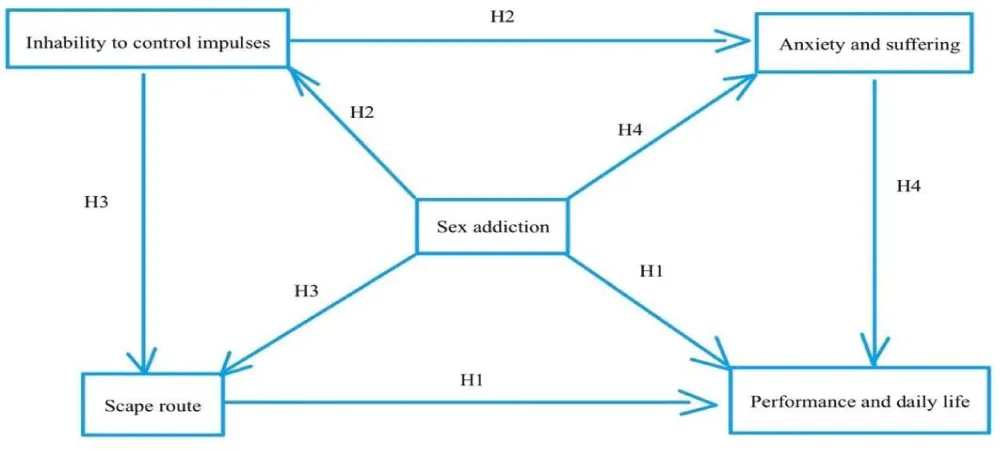
- H1: Sex addiction negatively interferes with the patient's daily life
- H2: Sex addiction causes the addict to feel unable to control their sexual behavior or impulses
- H3: Sexual behavior is used as a way of escape to relieve stress and anxiety
- H4: Sex addiction causes a high level of personal suffering and anxiety
Procedure
The study was conducted from early January through late December 2025 and consisted of three phases: pre-intervention, intervention, and post-intervention. Measurements were taken on the scales indicated before and after the intervention to assess its effectiveness. That is, in the first phase of the study, we had a group of 50 sex-addicted individuals who were assessed before implementing a therapeutic intervention procedure designed by the author of this article. In the second phase, we divided the sample into an experimental group to which the procedure was applied and a control group on a waiting list to which the program was not applied.
The experimental group received a therapeutic intervention following the program described below over twelve thematic blocks of consecutive, in-person sessions (one per week), each lasting approximately one hour, conducted by the author of this paper. To evaluate the effectiveness of the proposed program, a six-week "rest" period was allowed after the intervention concluded, and the same assessment tools used at the beginning were administered again.
While previous literature has explored sex addiction primarily from descriptive perspectives, this study contributes to the advancement of this field by employing a mixed-methods approach that sheds light-through quantitative and qualitative data-on the complex relationship between sex addiction and the onset of mental health problems and other related consequences. Additionally, this research overcomes the limitations of uncontrolled studies by implementing a design that compares an experimental group with a control group. This approach allows us not only to understand the associated comorbidities but also to provide rigorous empirical evidence on the clinical efficacy of the proposed therapeutic intervention.
The general objective of the study is the implementation and evaluation of a therapeutic intervention model for sex addiction designed and developed by the author of this paper.
- The specific objectives are as follows:
- To investigate whether sexual behavior negatively interferes with the person's daily life.
- To determine whether the patient shows an inability to control, reduce, or stop these impulses.
- To confirm whether the behavior is used as an escape mechanism to relieve stress or anxiety.
- To assess the level of distress or personal suffering it generates.
The following is a brief description of the proposed program for treatment of the patient's affective dysregulation, behavioral addiction, and cognitive dysregulation. It is a therapeutic-educational program with a biopsychosocial approach. The theoretical foundations upon which the author based its development are presented, and its components are supported by basic concepts from the science of addiction, such as relapse prevention, motivational interviewing, and cognitive restructuring.
Contributions from the psychodynamic model are utilized, as this model views such excessive sexual behaviors as an attempt to recover from adverse experiences during childhood. With this approach, we address potential childhood or adolescent traumas and identify possible risk factors such as unhealthy attachment patterns and deficits in emotion regulation, which predispose the individual to unregulated sexual behavior [9]. We agree with them that anxious attachment can lead an emotionally dependent person to develop uncontrolled sexual behaviors, seeking external validation from multiple partners.
Theories of the compulsive model of sexual addiction are invoked because they link it to the phenomenology of obsessive-compulsive disorder, characterized by repetitive, egosyntonic, intrusive thoughts and uncontrolled sexual acts. Intrusive and repetitive sexual thoughts and images constitute the obsession, and sexual behaviors constitute the compulsion. According to this model, intrusive and repetitive sexual thoughts, images, and fantasies cause anxiety, and the individual turns to sexual acting out to reduce this tension; but this produces more distress due to negative self-evaluation. Compulsion refers to the process in which sex becomes the mechanism for relieving the distress caused by the failure to carry out the obsessive behavior. Once carried out, the obsessive thought worsens and the compulsion becomes uncontrollable.
The model used views sex addiction as just another addiction; sex is compared to a toxic substance, so the dose becomes necessary to alleviate the discomfort the addict faces. However, engaging in the behavior in turn generates greater emotional distress, which is only relieved by engaging in further sexual behaviors. We focus on the symptomatic treatment of intense desire and preoccupation with sexual activity, withdrawal symptoms (such as depression, anxiety, and guilt), and, regarding dependence, intense desire and relapse prevention. If we follow this approach or model, we understand sex addiction as a defense mechanism to escape emotional, life, personal, relationship, work, and other problems, and it must be treated as such. The role of digital technologies (online pornography, social media, apps) is considered an essential variable in the intervention.
The cognitive-behavioral model is used to help individuals identify their unhealthy beliefs and behaviors and replace them with more adaptive ones. According to Carnes [3], sexual addiction consists of three irrational beliefs: (a) I am a bad person and do not deserve to be loved, (b) no one can love me just as I am, and (c) my needs will never be met if I have to depend on others. These ideas generate a flawed belief system that leads to faulty thinking, which in turn results in addictive behavior. These irrational beliefs are what we must address in the therapeutic process.
The proposed treatment aims to teach the patient to control their impulses, manage anxiety, adopt appropriate sexual attitudes, and eliminate maladaptive behaviors. It seeks to enhance the development of social skills, improve the couple's relationships, enhance sexual arousal in various situations and in response to "normal" stimuli, promote non-paraphilic fantasies (masturbatory reconditioning), modify cognitive aspects (recognition and correction of cognitive distortions, empathy training), and de-eroticize paraphilic stimuli (modification of the sequence of paraphilic automatisms, enhancing self-control in the face of paraphilic stimuli, aversive techniques). This therapeutic approach consists of twelve thematic blocks of individual sessions, divided into three phases: initial, intervention, and follow-up.
Treatment begins with an initial interview to gather as much information as possible about the problem. This is the time to sign the therapeutic contract and suggest the need to start making changes to the patient's lifestyle. The patient is informed that they will have to overcome a temporary two-month period of abstinence, which will be worked on in the coming sessions. During this first consultation, we gather the personal and family information necessary to design the subsequent intervention and, as a fundamental objective, ensure that the patient understands and accepts their illness [1].
In the second thematic block, we proceed to assess the pattern of addictive behavior by applying various diagnostic scales and a set of self-monitoring forms that provide information about the history of the problems presented. We can obtain additional information through the patient's partner, family members, or friends (consult the patient if they wish for these individuals to participate in their recovery). It is of great importance to establish whether anxiety, depression, hypersexuality, guilt, etc., are linked to the sexual addiction.
We work on impulse control so that the individual can maintain temporary abstinence for a minimum of two months. Initially, this involves avoiding stimuli associated with the addictive behavior (temporarily eliminating sexual activity, including masturbation; thus, the person understands that it is possible to live without sex, at least temporarily; limiting access to websites; or avoiding certain venues or places that may evoke sexual behaviors) [5]. Temporary abstinence will help the person redirect their sexuality toward a reasonable and acceptable pattern; if this cannot be achieved naturally, pharmacological support can be provided with the help of serotonin reuptake inhibitors. They must understand that sex is necessary in daily life, but not in the way they used to enjoy it, as this is neither adaptive nor healthy. It is time to train the ability to delay immediate gratification.
In the fifth thematic block, we will work on scheduled exposure, which will be of great help in achieving the desired long-term changes, with the goal being live exposure with response prevention in situations and stimuli related to addictive behavior. Initially, this exposure takes place in the company of a trusted person; once the risk of relapse is lower and the patient feels confident, they can then proceed with exposure on their own.
The next thematic block focuses on lifestyle changes, and the search for new goals and habits thus serve as alternatives to addictive behavior. It is important that the time previously devoted to the addiction be redirected toward pursuing new goals and taking on new responsibilities with one's partners, family, friends, work, studies, etc. [8].
In the next three sections, we will work on self-esteem, anxiety, depression, guilt, and impulsivity. If applicable, it will be very helpful for the partner to be involved in the therapeutic process. It is important for the patient to establish a schedule of activities (alone, with their partner, and with other family members who are part of their inner circle) to improve relationships with all of them. We must also work on sexuality with the partner so they can once again enjoy a fulfilling, satisfying, consensual, and pleasurable sex life for both.
Subsequently, we will then work on relapse prevention. And finally, in the follow-up phase, we will assess the changes (maintenance phase) and conduct follow-ups one month, three months, six months, one year, and two years after the end of treatment, to monitor the patient's progress following therapeutic discharge, using self-reports, self-monitoring, questionnaires, etc.
Each of these 12 thematic blocks consists of weekly, in-person, one-on-one sessions lasting approximately 60 to 90 minutes. To ensure replicability, each session followed a standardized structure: (a) [10-15] minutes reviewing the patient's general condition and the assigned exposure or relapse prevention tasks; (b) [40-50] minutes of psychoeducation, cognitive restructuring, and discussion of the corresponding thematic block; and (c) [10-15] minutes of wrap-up, addressing questions, and assigning new tasks.
The intervention was conducted by a therapist trained in clinical psychology with more than 35 years of experience in the treatment of addictions and impulse control disorders. To ensure treatment fidelity and consistency in its application across participants, a single therapist was responsible for administering the program according to a specific study protocol. In addition, biweekly clinical supervision meetings were held to review cases, standardize criteria, and ensure strict adherence to the treatment manual designed by Dr. Martin Herrero, "A Biopsychosocial Approach to Addictions." The criterion for considering that a patient had "completed" treatment and was therefore eligible for the experimental group was a minimum attendance rate of 80% of the sessions. To ensure that patients were following the therapy outside the clinic, self-reports were used to confirm that they were completing their homework assignments or maintaining abstinence.
Patients' adherence to the intervention guidelines (particularly during the phases of scheduled abstinence and stimulus control) was continuously monitored through daily self-reports, follow-up interviews, and brief questionnaires, which were reviewed by the therapist at the beginning of each session to correct any deviations from the protocol.
Data analysis
Descriptive and inferential statistical analyses were performed to examine the effects of the intervention in the experimental group and compare them with the control group; means, standard deviations, and 95% confidence intervals were calculated for each of the dependent variables in both groups (control and experimental) and at both assessment points (pretest and posttest). Since the sample size is no more than 50 people, we used the Shapiro-Wilk test to determine whether the data for the variables are distributed according to a normal distribution. We concluded that the data are not normally distributed because the significance level is less than .05.
To assess whether sex addiction negatively interferes with the patient's daily life (H1), Spearman's correlation (Spearman's rho) was used, correlating the scores between the Pathos and CSBI questionnaires.
To assess whether sex addiction causes the addict to feel unable to control their behavior or sexual impulses and thus measure the degree of impulsivity (H2), Spearman's rho was also used, correlating the variables Sast-R and Pathos.
To assess whether sex addiction is used as an escape mechanism to relieve stress and anxiety (H3), the Mann-Whitney U test was used, correlating the data of the "escape" variable to those from the Pathos variable.
To assess whether sex addiction produces a high level of personal suffering and anxiety (H4), Spearman's Rho correlation was also used, correlating the variables (STAI, ER) with the severity of the addiction (Pathos).
To determine whether there are significant differences between men and women regarding the severity of sex addiction, the Mann-Whitney U test was used (comparing Pathos means between men and women).
To determine whether there are significant differences among the different gender identities, the Kruskal-Wallis H test was used.
To analyze the relationship between the participants' age and the level of sex addiction, and to determine whether addiction increases or decreases as age increases,Spearman's correlation test was used, assuming the data were not normally distributed.
To determine whether there are significant differences in the level of sex addiction based on the socioeconomic level (high, medium, and low) of the informants, or based on their cultural or educational level, the non-parametric Kruskal-Wallis H test was used when comparing more than two independent groups, assuming the data were non-normal.
To analyze whether informants who use sexual behavior as an "escape route" exhibit significantly higher levels of anxiety, the non-parametric Mann-Whitney U test was applied, comparing two independent groups, assuming the data were non-normal.
To analyze whether there is a significant association between the respondents' sexual orientation and their ability to control or reduce sexual impulses and behaviors, the Pearson chi-square test (?2) was used, as this involved the analysis of two categorical variables.
Finally, to evaluate the effectiveness of the intervention and determine whether there were significant differences between the scores before (pre) and after (post) the intervention, the Wilcoxon signed-rank test was used, as this involved the analysis of two related samples with data that did not assume normality.
Results
The sample consisted of 25 women and 25 men. The mean age was 34.46 years (35.64 for women and 33.28 for men). 14% (n = 7) of the sample was bisexual, 70% (n = 35) was heterosexual, and the remaining 16% (n = 8) was homosexual. Data related to education and socioeconomic status, the degree to which the condition interferes with daily life, the inability to control impulses, and the percentage of addicts who use sex as an escape can be found (along with other statistics on clinical variables) in Table 3.
The relationship between therespondents' age and the level of sex addiction was analyzed to determine whether addiction increased or decreased with age; Spearman's correlation test was used. The results indicated that there is no statistically significant correlation between the two variables (rho = -.222, p = .121).
To test whether there are significant differences in the severity of sex addiction between men and women, the non-parametric Mann-Whitney U test was used. The results of the analysis indicated that there are no statistically significant differences between the two genders in the Pathos questionnaire scores (U = 244,500; Z = -1,383; p = .167).
The following is a transcript of a conversation with a female informant:
"I couldn't stop masturbating; I practically had to do it to motivate myself to finish my college assignments. I'd tell myself, once you get to this point, then you can masturbate."
The following is also a transcript of the portion of the interview with a male informant:
"I couldn't stop watching porn; I had several screens open at the same time, and I played several videos at double speed so I could take in more details. When I was walking down the street, I couldn't help but look at the breasts or hips of any woman who crossed 6my path-it didn't matter to me if she was older or younger�."
To determine whether there are significant differences in the level of sex addiction based on the socioeconomic status (high, middle, and low) of the participants, the non-parametric Kruskal-Wallis H test was used. The analyses indicate that there are no statistically significant differences in the severity of addiction (assessed using the Pathos questionnaire) among the different socioeconomic strata ($H$(2) = .239, $p$ = .887).
We found testimonies from research participants (in the experimental group) belonging to different socioeconomic groups who reported the same problems stemming from sex addiction, demonstrating that this type of addiction affects people from all social classes equally.
Unemployed participant with a basic education: "From the moment I woke up in the morning, all I could think about was having sex with different women."
University professor participant with a doctoral degree: "I couldn't stop looking at the female students; I'd peer down their necklines looking for an erotic image of my students; afterward, I had to masturbate to relieve the tension."
A non-parametric Kruskal-Wallis H test was conducted to assess whether significant differences exist in the severity of sex addiction across the participants' cultural or educational backgrounds. The analysis indicated that there are no statistically significant differences in the severity of addiction (assessed using the Pathos questionnaire) among the different cultural levels of the sample ($H$(4) = 4.726, $p$ = .317).
A Pearson's chi-square test (?!) was conducted to examine the relationship between participants' sexual orientation and their perceived ability to control or reduce their sexual impulses and behaviors. The results indicate that there is no statistically significant relationship between the two variables ($\?2$(2) = .195, $p$ = .907). Testimonials were gathered from study participants (in the experimental group) with different sexual orientations who reported the same problems stemming from sex addiction, demonstrating that this type of addiction affects people of all sexual orientations equally; homosexuals, heterosexuals, and bisexuals have the same difficulty controlling sexual impulses:
A bisexual woman participant stated: "My need to meet men and women knew no bounds; I spent a large part of my time on social media arranging sexual encounters, and it was never enough."
A homosexual man reported that "My sex addiction has caused me many financial and relationship problems because of my feeling of insatiability." A heterosexual man stated, "I've been divorced three times because of my uncontrolled sexual desire. I enjoy watching couples have sex, and my wives couldn't understand that, so they eventually left me."
To analyze whether there is a relationship between the informants' gender and the interference of addiction in their daily lives, Pearson's chi-squared test was used, and it was found that there are no statistically significant differences (?2 = 1). Therefore, it is concluded that the interference of addiction in patients' daily routines is independent of their gender.
There are also no statistically significant differences between gender identity and the degree to which sex addiction interferes with patients' daily lives (?2 = .435); addiction interferes (or does not interfere) equally, regardless of the participant's sexual identity.
It has been observed that more women than men were unable to control addictive sexual impulses or addictive behaviors, with the difference being statistically significant (?2 = .041).
Homosexuals, heterosexuals, and bisexuals have the same difficulty controlling sexual impulses. There are also no statistically significant differences between the variables of sociocultural status and the level of ability to control hypersexual impulses and behaviors (?2 = .722). The same can be said, as expected, regarding socioeconomic status (?2 = .153).
The initial hypotheses were subsequently evaluated. To determine whether a statistically significant relationship exists between addiction severity and its interference in patients' lives, participants' responses regarding the variable "sex addiction negatively interferes with my life" were analyzed in relation to their scores on the PATHOS questionnaire. A Mann-Whitney U test was conducted for this purpose. The analysis revealed statistically significant differences in PATHOS scores depending on whether the addiction interfered with the individuals' daily routines (𝑈 = 178.500, 𝑍 = -2.430, 𝑝 = .015). Consequently, Hypothesis 1 (𝐻") is supported.
In addition, a further statistical analysis was conducted, for which the data from the responses to the Pathos questionnaire (level of sex addiction) were cross-tabulated with the data obtained from the Csbi questionnaire (degree to which addiction interferes with the patient's life). A statistically significant relationship was found between the degree of addiction and its interference in the patients' lives, Spearman's rho = .005. This relationship is positive (correlation coefficient = .392), meaning that the higher the score on the Pathos, the higher the score on the Csbi (which makes perfect clinical sense: more addiction = more negative interference). Hypothesis 1 (H1) is thus confirmed.
The relationship between scores on the Pathos (sex addiction) and Sast-R (addict's sense of inability to control their sexual behavior or impulses) questionnaires was evaluated using Spearman's correlation coefficient. The results indicated a weak positive correlation that did not reach statistical significance (r = .202, p = .159). Therefore, insufficient evidence was found to affirm that a significant relationship exists between the two measures in the analyzed sample. This finding implies that hypothesis 2 (H2) is not corroborated. It is assumed that a larger sample size is needed to explain the lack of a relationship between scores on the Pathos scale (which measures general sexual addiction) and the SAST scale (which measures the degree of difficulty in controlling sexual impulses). In any case, some informants-once again, testimonies from study respondents- may shed light on this lack of correlation:
-Male respondent, 33 years old, heterosexual, middle socioeconomic status: "I think I have a problem with sex addiction. I've had serious personal problems because of sex and my relationship with it, but I'm not a drug addict who can't control the urge to use cocaine.
-Female respondent, 35 years old, heterosexual, middle socioeconomic status: "I've felt the urge to masturbate, to watch pornography, to touch women, but I've been able to wait for the right moment to do so, even though I know this has caused me anxiety and emotional distress. I know it's not normal, but this emotional distress would disappear when I engaged in the behavior that you psychologists call 'problem behavior."
To evaluate whether sex addiction functions as a coping mechanism to alleviate stress and anxiety (𝐻#), a non-parametric Mann-Whitney U test for independent samples was conducted. The statistical analysis revealed significant differences in Pathos questionnaire scores depending on whether or not the participants used sexual behavior as an escape mechanism (U = 191.000, Z = 2.462, p = .014). This finding implies that hypothesis 3 (H3) is supported. The testimony of the informant mentioned above corroborates this statement. Therefore, it appears that these individuals use sex as an escape mechanism. However, the question arose as to whether this escape behavior reduced the anxiety levels of these individuals. The results showed that there are no statistically significant differences in either state anxiety (U = 244,000; Z = -1.272; p = .203) or trait anxiety (U = 238,000; Z = -1.371; p = .170). It was found that people who use sex as an escape mechanism have anxiety levels (both in their current state and in their general personality) very similar to those of people who do not use sex as an avoidance mechanism.
To evaluate the association between the severity of sex addiction and participants' mental health-specifically regarding anxiety and personal distress-Spearman's rank correlation coefficient was calculated. The relationship between the severity of the addiction (assessed using the Pathos questionnaire) and state and trait anxiety levels (assessed using the STAI questionnaire) was analyzed. The results showed a positive and statistically highly significant correlation with both state anxiety (r = .543; p < .001) and trait anxiety (r = .549; p < .001), with a large effect size 𝑟 = .58, 𝑝 < .001, IC 95%. This data is clinically relevant since we understand that the greater the addiction, the greater the repercussions on the mental health (in this case anxiety as a state and as a trait) of the dependent person. These findings confirm Hypothesis 4 (H4) and the distress associated with this type of addiction. We can corroborate this conclusion, based on statistical data, with the testimony of this informant: "I couldn't think of anything else but contacting prostitutes; the anxiety I'd been feeling since mid-afternoon would only subside the moment I contacted them-simply making an appointment with one of these women was enough to relieve my anxiety. Neither anti-anxiety medication, nor meditation, nor relaxation techniques could calm my anxiety; only sexual contact with sex workers-the simple act of fantasizing about them once I'd already scheduled a meeting- managed, on the one hand, to relieve my anxiety, and on the other, to generate enough pleasure and arousal to get me through the day."
To evaluate the intervention's effectiveness, statistical comparisons were conducted to identify significant differences between the control and experimental groups across the pre- and postintervention assessment points. Table 4 presents the post-intervention diagnostic test results. A reduction in nearly all scores was observed in Table 4 compared to the baseline values in Table 2 (both available in the appendices). The exception was trait anxiety, which followed expected patterns despite showing some minor reductions. The following section systematically examines these variable differences to establish the overall efficacy of the therapeutic intervention.
To evaluate the intervention's effectiveness in mitigating the degree to which addiction interferes with patients' lives, a Wilcoxon signed-rank test for paired samples was conducted. The analysis revealed a statistically significant difference between pre- and post-intervention scores (𝑍 = -3.000, 𝑝 = .003). These findings indicate that the therapeutic program successfully reduced the disruptive impact of addictive behaviors on participants' daily routines. This quantitative outcome is further supported by qualitative feedback from the participants. For instance, one participant detailed the clinical impact of the program as follows:
"You've saved my life; my family is very grateful to you. You've made me a free woman, no longer dependent on my uncontrolled sexual urges and impulses. Today, my sexual relationships are normal, pleasurable, and consensual with all the women I'm with. I don't even need to look at other women or contact them through social media or dating apps. Now, when I'm with a woman, I'm simply with her-my mind is no longer focused on how to meet another woman. I'm a lesbian who's been in a stable relationship for months, and that's thanks to the program I went through".
To evaluate the therapeutic intervention's effect on participants' perceived ability to regulate sexual impulses and behaviors, a Wilcoxon signed-rank test for paired samples was conducted. The analysis revealed statistically significant improvements from baseline to post-intervention assessments (𝑍 = -2.673, 𝑝 = .008). These results underscore the program's efficacy in enhancing participants' self-control by the end of the treatment. This quantitative improvement is strongly supported by qualitative reports, as illustrated by one participant who noted: "These days, I am able to control my sexual impulses and delay immediate gratification.
A Wilcoxon signed-rank test was utilized to determine if the intervention decreased the use of sexual behavior as a maladaptive coping strategy. Results indicated a statistically significant reduction in such behaviors from pre- to post-test evaluations (𝑍 = -2.449, 𝑝 = .014)demonstrating the therapy's effectiveness in reducing escapist sexual habits. Corroborating these statistical results, a 38-year-old bisexual participant shared: "I am now able to avoid using sex to relieve tension, stress, or personal problems; sex is simply another part of my relationship.
To evaluate changes in sexual addiction severity, the SAST-R questionnaire was administered. A Wilcoxon signed-rank test revealed a statistically significant decrease in post-intervention scores (𝑍 = -2.685, 𝑝 = .007), reflecting notable clinical improvements. Following treatment, patients demonstrated increased self-awareness regarding their compulsive behaviors. They became capable of identifying intrusive sexual thoughts, failed self-regulation attempts, and the resulting psychosocial impairments across family, work, and social domains. Additionally, participants learned to recognize associated emotional distress-such as guilt, post-coital depression, and the use of sex for emotional regulation-alongside specific high-risk behaviors like compulsive internet pornography use. Table 3 presents the pre- and post-intervention mean scores, illustrating a clinically meaningful reduction of nearly 10 points.
As a primary indicator of therapeutic efficacy, the overall scores on the Pathos questionnaire were also compared before and after treatment. The results of the Wilcoxon signed-rank test revealed a highly significant decrease in the severity of sexual addiction ($Z$ = -5.881, p$ < .001). This, combined with the improvements observed in the variables of life interference ($p$ = .003) and control ability ($p$ = .008), confirms the effectiveness of the intervention in reducing addictive symptoms in the studied sample.
Each question on the questionnaire targets a core symptom of compulsive sexual behavior; upon analyzing the scores obtained on this questionnaire, we detected drastic reductions in all six dimensions. The patient's clinical profile reveals very clear information:
- Worries are reduced as the patient has fewer recurrent and obsessive thoughts about sex that consume a large part of their time.
- Feelings of guilt and shame are reduced, as patients are able to control their sexual impulses and behaviors, thereby reducing the number of behaviors they later feel ashamed of; they begin to be able to differentiate between healthy pleasure and addiction.
- The number and frequency of sexual behaviors harmful to others decrease.
- As a result, the patient feels less sadness, so they do not need to use sex as a mechanism to avoid negative feelings (depression, loneliness, or boredom).
The Compulsive Sexual Behavior Inventory (CSBI) was analyzed. The Wilcoxon signed-rank test showed a highly significant reduction in scores following the intervention ($Z$ = -3.259, $p$ = .001). This finding is crucial, as it confirms that the treatment not only reduced patients' subjective perceptions but also had a direct impact on the specific compulsive behaviors measured by this inventory. Furthermore, as with the previous variables, Table 4 shows the mean values of the questionnaire before and after the intervention; note the reduction in both the mean and mode values.
To evaluate the therapy's emotional impact, pre- and post-intervention state anxiety levels were compared using a Wilcoxon signed-rank test. The analysis revealed a statistically significant reduction in self-reported anxiety among participants (𝑍 = -4.942, 𝑝 < .001). These findings suggest that the therapeutic process was effective not only in alleviating addictive symptoms but also in stabilizing participants' emotional states, thereby significantly reducing feelings of tension and apprehension.
To assess changes in the underlying predisposition to anxiety, trait anxiety scores were compared using a Wilcoxon signed-rank test. Results indicated a statistically significant decrease at post-test (𝑍 = -2.627, 𝑝 = .009). This finding holds clinical relevance, as it demonstrates that emotional improvements extended beyond transient mood alterations; rather, the intervention successfully reduced participants' general propensity to experience anxious states. Table 5 presents the pre- and post-intervention mean questionnaire scores, illustrating a notable reduction across these measures, particularly in the state anxiety variable.
Discussion
The primary objective of this study was to evaluate the efficacy of a targeted therapeutic program for sex addiction by comparing an experimental treatment group with a waitlist control group. The intervention was administered to a demographically balanced sample of 50 adults- equally distributed by gender and predominantly heterosexual, with a middle-to-high socioeconomic and educational background. Prior to treatment, baseline clinical assessments across standardized instruments (PATHOS, CSBI, and SAST-R) revealed severe addiction-related symptomatology. Specifically, the sample exhibited elevated anxiety, significant disruptions to daily functioning, diminished impulse control, and a pronounced reliance on compulsive sexual behaviors as a maladaptive escape mechanism. Establishing this baseline clinical severity is crucial, as it underscores the clinical relevance and magnitude of the therapeutic improvements observed postintervention.
Consistent with expectations, the severity of sex addiction was found to be independent of participant age, with no significant correlation observed between age and symptom trajectory. Furthermore, male and female participants exhibited comparable levels of addictive symptomatology. Finally, socioeconomic status did not emerge as a significant variable associated with the severity of the addiction.
Similarly, educational attainment did not emerge as a significant factor influencing the severity of sex addiction among the participants. Furthermore, the functional impairment and disruption to daily routines caused by the addiction were found to be independent of sexual orientation.
Notably, the data suggest that female participants experienced greater difficulty regulating sexual impulses and addictive behaviors compared to their male counterparts.
Regarding the initial hypotheses, the proposed theoretical model was largely supported by the findings, with the exception of Hypothesis 2:
- Results indicate a significant positive association between addiction severity and daily life interference. Specifically, participants with higher addiction levels on the PATHOS screening tool also exhibited greater severity in their compulsive sexual behaviors on the CSBI. These findings support Hypothesis 1 (𝐻").
- Contrary to expectations, addiction levels reported on the PATHOS were not significantly associated with elevated scores on the SAST-R within this sample. Consequently, Hypothesis 2 (𝐻!) is not supported.
- Addiction severity was significantly correlated with the use of sex as a strategy for managing stress and anxiety. The reliance on impulsive sexual behaviors as a maladaptive escape mechanism is strongly linked to higher reported addiction levels, thereby supporting Hypothesis 3 (𝐻#).
- A positive association was observed between the severity of sex addiction and patient anxiety levels, encompassing both situational (state) and dispositional (trait) anxiety. Thus, Hypothesis 4 (𝐻$) is also supported.
The therapeutic program proposed by Dr. Martin Herrero demonstrated significant efficacy, as evidenced by statistically significant changes in pre- and post-intervention scores among the experimental group (𝑛 = 25). In contrast, scores for the control group remained stable across the same assessment periods. These findings and their practical implications will be addressed in the concluding section.
Conclusion
In a systematic review and meta-analysis examining the impact of the COVID-19 pandemic on the rise of addictive behaviors, Alimoradi et al. [10] reported an overall behavioral addiction prevalence of 11.1%. Specifically, the prevalence rates were 30.7% for internet addiction, 26% for social media addiction, and 9.4% for sex addiction. These figures underscore a growing, yet insufficiently understood, public health challenge that continues to affect an expanding demographic.
Recent studies by Brand et al. and Sassover and Weinstein [11] have provided valuable insights into the conceptualization of behavioral addictions within the broader spectrum of addictive disorders. Despite this conceptual progress, Griffiths [12] cautioned that formal nosological recognition remains a challenge. While there is mounting evidence that excessive engagement in sex, pornography, social media, exercise, work, and shopping may represent genuine disorders for a minority of individuals, their inclusion in formal psychiatric diagnostic manuals is unlikely in the near term. Such recognition will ultimately require the accumulation of high-quality, comprehensive empirical data across multiple research domains [13-47].
Rather than engaging in the ongoing nosological debates regarding symptom inclusion in the DSM-5 or evaluating the diagnostic criteria of the ICD-11, the present study pursued two distinct clinical objectives. First, it aimed to depathologize consensual, non-normative sexual behaviors (e.g., certain forms of consensual non-monogamy and pornography consumption) per se. Second, it sought to redirect the clinical focus toward the loss of control, functional impairment, and potential harm to oneself or others-elements widely recognized in addiction science as the core features of addictive disorders.
Despite a recent proliferation of publications, the available literature is constrained by its heavy reliance on survey-based research conducted within general populations. There is a marked paucity of qualitative data examining such problematic internet use in clinical or subclinical samples, particularly among treatment-seeking individuals. To address this empirical gap, the present study employs a mixed-methods design-integrating both quantitative and qualitative methodologies-to advance the understanding of this disorder specifically within a cohort of individuals actively seeking therapeutic support, thereby moving beyond the limitations of general population estimates.
Irrespective of ongoing nosological debates, the present findings indicate that the proposed therapeutic program holds significant clinical utility for individuals presenting with sex addiction.
Overall, the intervention was associated with a marked reduction in state anxiety and a notable decrease in addiction-related functional impairment. Furthermore, patients demonstrated enhanced self-regulation-evidenced by improved impulse control and the capacity to delay immediate gratification-alongside a significantly reduced reliance on sexual behavior as a maladaptive coping mechanism for daily stress.
Following the intervention, the experimental group demonstrated significant reductions across the following clinical domains:
- Overall addiction severity: Decreased scores on the PATHOS screening tool.
- Functional impairment: A reduction in the extent to which addictive behaviors interfered with participants' daily lives.
- Impulse dysregulation: A decrease in participants' subjective inability to control their sexual impulses and behaviors.
- Maladaptive coping: A diminished reliance on sexual behavior as an escapist mechanism for relieving stress or anxiety, facilitating the adoption of healthier coping strategies.
- Relapse behaviors: Fewer failed attempts to abstain from or mitigate specific sexual activities (e.g., compulsive internet pornography consumption, encounters with strangers, and other high-risk behaviors).
- Anxiety symptomatology: Lowered levels of trait anxiety, alongside particularly pronounced reductions in state anxiety.
Conversely, participants demonstrated an enhanced capacity to:
- Critically analyze the psychosocial impact of their behavior, including family, legal, or occupational conflicts, as well as social neglect stemming from their sexual conduct.
- Identify and process negative affective states, such as feelings of guilt, degradation, and post-coital depression.
From an applied clinical perspective, these findings substantiate the utility of the proposed therapeutic approach, as it successfully reduces symptom severity across the core dimensions measured by standard sex addiction assessment scales.
Limitations and strengths of the study
While the present study offers valuable clinical insights, several methodological limitations warrant consideration and necessitate cautious interpretation of the findings:
- Sample Size and Representativeness: Although the relatively small sample size inherently limits the study's statistical power and the generalizability of the findings to the broader population, this constraint was the result of a deliberate methodological choice. We specifically opted against the use of online platforms and indirect mass surveys, prioritizing in-person fieldwork and direct participant engagement. This face-to-face approach yields richer, clinically nuanced data that is fundamentally difficult to capture through large-scale, remote sampling.
- Design and Self-Selection Bias: By employing a quasi-experimental design with non-random assignment relying on convenience sampling, it is impossible to completely rule out the influence of self-selection biases or uncontrolled confounding variables. Consequently, these factors pose an inherent threat to the internal validity of the study.
- Researcher Allegiance Effect: Because the evaluated therapeutic program was designed and administered by the principal investigator, there is an inherent risk of therapist allegiance bias. It is possible that the practitioner's clinical expectations implicitly influenced the delivery of the treatment and, consequently, inflated the positive outcomes. This is a well-documented confounding factor in trials evaluating newly developed interventions and must be considered when interpreting these findings.
- Follow-Up Duration: The assessment of therapeutic efficacy was limited to short-term follow-up points (one and three months post-intervention). The lack of extended longitudinal data precludes definitive conclusions regarding the long-term maintenance of therapeutic gains. However, an extended follow-up phase (assessing outcomes at 6, 9, 12, and 24 months) is currently underway. These ongoing evaluations will yield essential data for future reports concerning the long-term stability of the intervention's efficacy.
Future studies should employ randomized controlled trials (RCTs) with adequately powered sample sizes and objective outcome measures. Furthermore, extended longitudinal follow-ups are necessary to ascertain the long-term maintenance of these therapeutic gains.
Strengths of the study
Notwithstanding these limitations, the present study possesses several notable strengths that support its scientific rigor and clinical utility:
- Ecological Validity and Direct Clinical Contact: Data collection through in-person, direct therapeutic contact significantly enhances the ecological validity of the findings, particularly given the known clinical challenges associated with accessing and engaging hard-to-reach populations, such as individuals with compulsive sexual behavior disorder.
- Focus on a Treatment-Seeking Clinical Sample: Unlike a substantial portion of the existing literature that relies on non-clinical student samples or online general population surveys, this study evaluated an actively treatment-seeking cohort, ensuring that the findings directly inform real-world psychotherapeutic applications.
- Specialized Intervention Design: The implementation of a tailored therapeutic program specifically addresses the complex underlying mechanisms of sex addiction, offering a structured clinical approach in a domain where standardized, empirically supported treatments remain scarce.
- Methodological Rigor via Control Comparison: The inclusion of a waitlist control group establishes an ethically sound baseline for comparison, effectively controlling for spontaneous remission, the passage of time, and non-specific therapeutic effects. reduction and individual therapeutic progress.
Institutional review board statement
The study was conducted in accordance with the Declaration of Helsinki. Under Spanish regulatory frameworks-specifically Law 14/2007 on Biomedical Research and Organic Law 3/2018 on Personal Data Protection and Guarantee of Digital Rights (LOPDGDD)-this non-invasive research involved minimal risk and strict participant anonymity without collecting personally identifiable data, thereby meeting the criteria for formal ethical review exemption. Nevertheless, given the sensitive nature of the addressed sexual behaviors, a rigorous participant protection protocol was implemented. The therapeutic team continuously monitored participants for signs of acute emotional distress or psychological reactivity during assessment and intervention sessions. Furthermore, a clear clinical referral mechanism was established: in the event of severe distress, symptom exacerbation, or needs exceeding the study's scope, participants were immediately referred to specialized public mental health services and external clinical professionals, always ensuring participant safety and well-being.
Informed Consent Statement: Informed consent was obtained from all subjects involved in the study.
Data Availability Statement: All data were treated confidentially and anonymously and are available upon request to the corresponding author.
Highlights
What are the main findings?
The severity of sex addiction and its negative interference in daily routines occur independently of the patients' age, socioeconomic status, educational level, and sexual orientation.
While both male and female patients exhibit comparable overall levels of addiction severity, women demonstrate a greater difficulty in controlling their sexual impulses and addictive behaviors.
A direct relationship exists between the severity of the addiction and the intensity of compulsive sexual behaviors, which are significantly utilized by patients as an escape from daily life problems.
What are the implications of the main findings?
The transversal presentation of sex addiction across diverse sociodemographic profiles emphasizes the clinical need for unbiased assessment protocols that do not underestimate risks based on age, education, or social class.
The observed gender differences regarding impulse management highlight the critical necessity of developing gender-sensitive therapeutic interventions tailored to the specific behavioral vulnerabilities of female patients.
Because higher addiction severity is directly linked to daily life interference and escapism, psychological treatments must prioritize teaching adaptive coping mechanisms to restore patients' functional routines.
- Martín Herrero JA. Bio-psycho-sociological intervention in addictions. Madrid: McGraw-Hill; 2021.
- George M, Maheshwari S, Chandran S, Rao SS, Manohar S, Sathyanarayana Rao TS. Psychosocial intervention for sexual addiction. Indian J Psychiatry. 2018;60(Suppl 4):S510-S513. Available from: doi:10.4103/psychiatry.IndianJPsychiatry_38_18.
- Carnes P. Sexual addiction and compulsion: recognition, treatment, and recovery. CNS Spectr. 2000;5:63-74.
- Gori A, Topino E. Problematic sexual behaviors, dissociation, and adult attachment: A path analysis model. J Affect Disord Rep. 2024;17:100786. Available from: doi:10.1016/j.jadr.2024.100786.
- Echeburúa E, Corral P, Amor PJ. The challenge of new addictions: therapeutic goals and intervention pathways. Psicol Conduct. 2005;13:511-525.
- Echeburúa E, et al. Does sex addiction really exist? Adicciones. 2012;24(4):281-286.
- Cáceres J. Sex addiction. Psicol Conduct. 2005;13(3):405-416.
- Becoña E, Oblitas LA. Addictions and health. Rev Psicol Cient. 2002;4(2). Available from: http://www.psicologiacientifica.com/adicciones-y-salud/
- Sahithya BR, Kashyap RS. Sexual addiction disorder: a review with recent updates. J Psychosex Health. 2022;4(2):95-101. Available from: doi:10.1177/26318318221081080.
- Alimoradi Z, Lotfi A, Lin CY, et al. Estimation of behavioral addiction prevalence during the COVID-19 pandemic: a systematic review and meta-analysis. Curr Addict Rep. 2022;9:486-517. Available from: doi:10.1007/s40429-022-00435-6.
- Sassover E, Weinstein AM. Should compulsive sexual behavior (CSB) be considered as a behavioral addiction? A debate paper presenting the opposing view. J Behav Addict. 2022;11(2):166-179. Available from: doi:10.1556/2006.2020.00055.
- Griffiths MD. Disorders due to addictive behaviors: Further issues, debates, and controversies. Commentary to the debate: Behavioral addictions in the ICD-11. J Behav Addict. 2022;11(2):180-185. Available from: doi:10.1556/2006.2022.00025.
- Blinka L, et al. Online sex addiction: A qualitative analysis of symptoms in treatment-seeking men. Front Psychiatry. 2022;13:907549. Available from: doi:10.3389/fpsyt.2022.907549.
- Borrello L, Antonelli P, Salvatori G, Dettore D. The relationship between love addiction and sex addiction and the influence of social support: An exploratory empirical research. Sex Addict Compulsivity. 2023;30(2):176-196. Available from: doi:10.1080/26929953.2023.2185715.
- Bőthe B, Potenza MN, Demetrovics Z. Debates on compulsive sexual behavior disorder: A call for global and interdisciplinary perspectives. Arch Sex Behav. 2024;53(4):1215-1220. Available from: doi:10.1007/s10508-024-02836-2.
- Calderón GO. Sexual addiction. Rev Esp Drogodepend. 2021;46(2):5-11.
- Chau C, Chan RSW, Liang J, Poon KT. The relationship of sexual objectification with internet addiction and its implications for mental health. Comput Human Behav. 2024;155:108179. Available from: doi:10.1016/j.chb.2024.108179.
- Chiclana C. Hypersexuality, hypersexual disorder and comorbidity in Axis I. In: Moreno P, chair. Personality Disorder. Proceedings of the XIV Virtual Congress of Psiquiatria.com (Interpsiquis 2013); 2013. p. 29.
- Cismaru-Inescu A, Andrianne R, Triffaux F, Triffaux JM. Can we treat sexual addiction? L'addiction au sexe, ça se soigne? Rev Med Liege. 2013;68(5-6):354-358.
- Coleman-Kennedy C, Pendley A. Assessment and diagnosis of sexual addiction. J Am Psychiatr Nurses Assoc. 2002;8(5):143-151. doi:10.1067/mpn.2002.128827.
- Cruz DM, et al. Impulsivity and sexual addiction: factor structure and criterion-related validity of the Sexual Addiction Screening Test in Mexican adults. Front Psychiatry. 2023;14:1265822. Available from: doi:10.3389/fpsyt.2023.1265822.
- Dickenson JA, Gleason N, Coleman E, Miner MH. Prevalence of distress associated with difficulty controlling sexual urges, feelings, and behaviors in the United States. JAMA Netw Open. 2018;1:e184468. Available from: doi:10.1001/jamanetworkopen.2018.4468.
- Do Espírito Santo Gonçalves P, De Tubino Scanavino M. Investigation of the psychometric properties of the Toronto Alexithymia Scale in men with and without compulsive sexual behavior. Sex Med. 2024;12(4):qfae050. Available from: doi:10.1093/sexmed/qfae050.
- Droubay BA, White A. Sexual orientation, homophobic attitudes, and self-perceived pornography addiction. Sex Res Soc Policy. 2024;21(4):1567-1583. Available from: doi:10.1007/s13178-023-00846-8.
- Droubay BA, Shafer K, Butters RP. Sexual desire and subjective distress among pornography consumers. J Sex Marital Ther. 2020;46(8):773-792. Available from: doi:10.1080/0092623X.2020.1822483.
- Drozda NA, Delmonico D. Sex addiction 101: Empirical support, treatment considerations, and future directions. J Addict Offender Couns. 2024;45(1):111-131. doi:10.1002/jaoc.12129.
- Fernandez DP, Griffiths MD. Psychometric instruments for problematic pornography use: A systematic review. Eval Health Prof. 2021;44(2):111-141. Available from: doi:10.1177/0163278719861688.
- Franken Y. Is sexual craving a sign of sex addiction? Addiction. 2023;118(12):2315-2316. doi:10.1111/add.16362.
- Giordano AL, Hedden LE, Kim SW, Lundeen LA, Lu Z. Childhood trauma and sex addiction among adult men. J Addict Offender Couns. 2024;45(2):221-233. Available from: doi:10.1002/jaoc.12134.
- Gomez R, Brown T, Stavropoulos V. The Bergen-Yale Sexual Addiction Scale (BYSAS): Longitudinal measurement invariance across a two-year interval. Psychiatr Q. 2024;95(4):561-577. Available from: doi:10.1007/s11126-024-10087-6.
- Goslar M, Leibetseder M, Muench HM, Hofmann SG, Laireiter AR. Treatments for internet addiction, sex addiction and compulsive buying: A meta-analysis. J Behav Addict. 2020;9(1):14-43. Available from: doi:10.1556/2006.2020.00005.
- Grubbs JB, Lee B, Floyd CG, Bőthe B, Jennings T, Kraus SW. What is the "sex" in sex addiction? Problem behaviors reported among those endorsing compulsive sexual behavior. Sex Health Compulsivity. 2024;31(4):351-367. Available from: doi:10.1080/26929953.2024.2386518.
- Hernández SSF. Sex addiction, hypersexual disorder, or compulsive sexual behavior disorder. 2023. Available from: https://research.ebsco.com/plink/7558c191-10a6-3249-94b5-b9b5deaea918.
- Kaplan MS, Krueger RB. Diagnosis, assessment, and treatment of hypersexuality. J Sex Res. 2010;47(2-3):181-198. Available from: doi:10.1080/00224491003592863.
- Jha A, Banerjee D. Neurobiology of sex and pornography addictions: A primer. J Psychosexual Health. 2022;4(4). Available from: doi:10.1177/263183182211160.
- Koós M, Bőthe B, Orosz G, Potenza MN, Reid RC, Demetrovics Z. The negative consequences of hypersexuality: Revisiting the factor structure of the Hypersexual Behavior Consequences Scale and its correlates in a large, non-clinical sample. Addict Behav Rep. 2021;13:100321. Available from: doi:10.1016/j.abrep.2020.100321.
- Kowalewska A, Bőthe B, Kraus SW. Compulsive sexual behavior disorder: The importance of research on women. J Behav Addict. 2024;13(1):12-15. Available from: doi:10.1556/2006.2023.00087.
- Olive TO, Antolín-Suárez L, Ramos P, Jiménez L, Jiménez-Iglesias TO, Dark MC, et al. Should problematic sexual behavior be viewed under the scope of addiction? A systematic review based on DSM-5 substance use disorder criteria. Addict Behav Rep. 2023;18:100510. Available from: doi:10.1016/j.abrep.2023.100510.
- Pistre N, Schreck B, Grall-Bronnec M, Fatseas M. Should problematic sexual behavior be viewed under the scope of addiction? A systematic review based on DSM-5 substance use disorder criteria. Addict Behav Rep. 2023;18:100510. Available from: doi:10.1016/j.abrep.2023.100510.
- Pufulete EM, Fontán AG, Palazón A, Martí JMF. Personality traits and clinical characteristics of the female partners of sex addicts: Pilot study. 2021. Available from: https://research.ebsco.com/plink/15601e1e-0e36-38a7-b2d3-ebbccfabd0d6.
- Reid RC, Grubbs JB, Kraus SW. Prevention and treatment of sex addiction. In: Potenza MN, Faust KA, Faust D, editors. The Cambridge Handbook of Substance and Behavioral Addictions. Cambridge: Cambridge University Press; 2020. p. 254-261. Available from: doi:10.1017/9781108632591.025.
- Rodriguez MR, Hodann-Caudevilla RM, Paramo YT, Molina-Ruiz RM. Non-substance addictions or behavioral addictions. Medicina (Madr). 2023;13(85):4998-5009. Available from: oi:10.1016/j.med.2023.08.011.
- Saberi Zafarghandi MB, Javaheri A, Shati M, Roshanpajouh M. Evaluating the effectiveness of a short-term clinical guideline to treat sexual addiction disorder in people with sexual addiction: a clinical trial. Iran J Psychiatry Clin Psychol. 2022;28(2):144-161. Available from: doi:10.32598/ijpcp.28.2.3864.1.
- Saberi Zafarghandi MB, Javaheri A, Shati M, Roshanpajouh M. Evaluating the effectiveness of a short-term clinical guideline to treat sexual addiction disorder in people with sexual addiction: a clinical trial. Iran J Psychiatry Clin Psychol. 2022;28(2):144-161. Available from: doi:10.32598/ijpcp.28.2.3864.1.
- Sassover E, Weinstein AM. Should compulsive sexual behavior (CSB) be considered as a behavioral addiction? A debate paper presenting the opposing view. J Behav Addict. 2022;11(2):166-179. Available from: doi:10.1556/2006.2020.00055.
- Van Tuijl P, Tamminga A, Meerkerk GJ, Verboon P, Leontjevas R, van Lankveld J. Three diagnoses for problematic hypersexuality: which criteria predict help-seeking behavior? Int J Environ Res Public Health. 2020;17(18):6907. Available from: doi:10.3390/ijerph17186907.
- Vera Cross G, Aboujaoude N, Liberacka-Dwojak M, Wiłkość-Dębczyńska M, Rochat L, Khan R, Khazaal Y. How much online pornography is too much? A comparison of two theoretically distinct assessment scales. Arch Public Health. 2024;82(1):94. Available from: doi:10.1186/s13690-024-01294-5.


 Save to Mendeley
Article Alerts
Subscribe to our articles alerts and stay tuned.
 This work is licensed under a Creative Commons Attribution 4.0 International License.