Journal of Clinical Microbiology and Biochemical Technology
Monitoring and Characterisation of Marine Litter on Coastal Areas of Krk Island (Croatia): Implications for Circular Economy and Coastal Management
Expert in Circular Economy and Blue Economy; Technical Manager responsible for municipal waste management on Krk Island, Croatia
Author and article information
Cite this as
Kosić D. Monitoring and Characterisation of Marine Litter on Coastal Areas of Krk Island (Croatia): Implications for Circular Economy and Coastal Management. J Clin Microbiol Biochem Technol. 2026; 12(1): 13-18. Available from: 10.17352/jcmbt.000062
Copyright License
© 2026 Kosić D. This is an open-access article distributed under the terms of the Creative Commons Attribution License, which permits unrestricted use, distribution, and reproduction in any medium, provided the original author and source are credited.Marine litter has become one of the most significant environmental challenges affecting coastal ecosystems worldwide. Plastic waste, due to its persistence and widespread use, represents the dominant component of marine debris in many coastal areas. This study presents the results of marine litter monitoring conducted on selected coastal areas of Krk Island, Croatia, including Punta Debij (Punat), Zala (Stara Baška), Redagara, Prniba, and Voz. The research was conducted within the framework of the Interreg IPA ADRION JOINABLE Project and aimed to assess the composition, quantity, and characteristics of marine litter, while identifying opportunities for circular economy applications and improved coastal management. Results indicate substantial differences between urban and remote coastal sites, with cigarette butts and plastic packaging being among the most common waste categories. The study highlights challenges related to plastic degradation, secondary fragmentation, and the increasing need for innovative waste prevention and recycling strategies.
Marine litter is recognised as one of the major environmental pressures affecting marine and coastal ecosystems worldwide. It has negative impacts on biodiversity, tourism, fisheries, navigation, and human well-being [1,2].
The Mediterranean Sea is considered particularly vulnerable due to its semi-enclosed nature, high population density, heavy maritime traffic, and seasonal tourism pressures [3]. Within this context, the Adriatic Sea experiences continuous inputs of marine litter originating from land-based activities, maritime transport, fisheries, and recreational use of coastal areas [4].
Plastic materials are especially problematic because of their persistence and resistance to environmental degradation. Over time, larger plastic items fragment into smaller pieces through exposure to solar radiation, wave action, and mechanical abrasion, ultimately contributing to the generation of microplastics [5,6].
This study was conducted within the framework of the Interreg IPA ADRION JOINABLE Project, which promotes innovative approaches to marine litter monitoring, community engagement, and circular economy solutions in coastal regions. The objective of this research was to assess the quantity and composition of marine litter on selected beaches of Krk Island and to evaluate implications for local coastal management and circular economy initiatives (Figures 1-3 and Table 1).
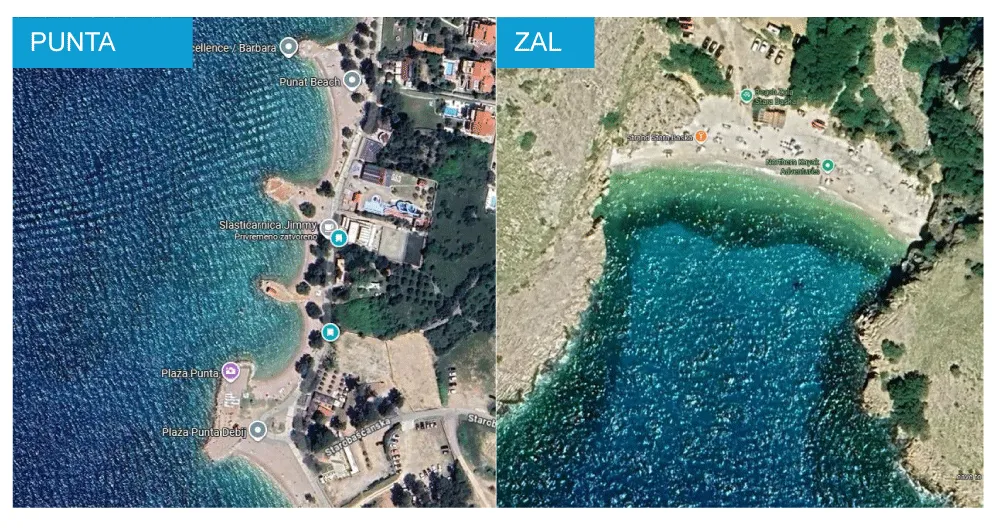
Materials and methods
Field monitoring activities were implemented as part of the JOINABLE project using standardised methodologies for marine litter assessment based on UNEP and European Marine Strategy Framework Directive recommendations [7,8].
Marine litter monitoring surveys were conducted at two coastal locations on Krk Island:
- Punta Debij (Punat)
- Zala (Stara Baška)
In addition, beach clean-ups were carried out at:
- Redagara
- Prniba
- Voz
The methodology included:
- visual beach inspections,
- marine litter monitoring and assessment,
- litter collection,
- waste sorting and categorisation,
- weighing of collected material,
- characterisation of plastic waste,
- assessment of degradation status,
- digital recording and validation of monitoring data.
Collected waste was classified according to major material categories including plastics, glass, textiles, metals, wood, construction debris, and cigarette butts.
Monitoring Design and Sampling Protocol
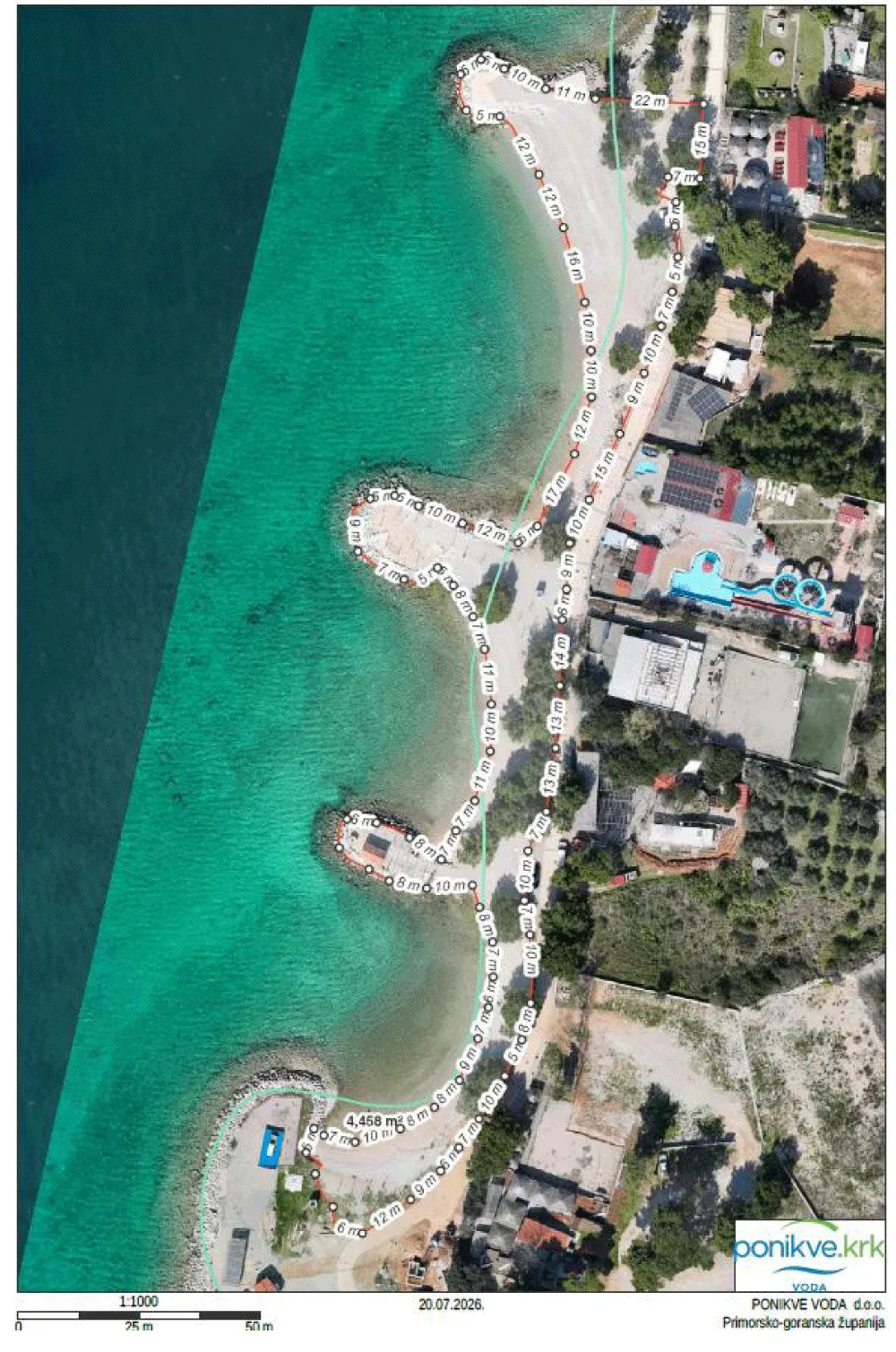
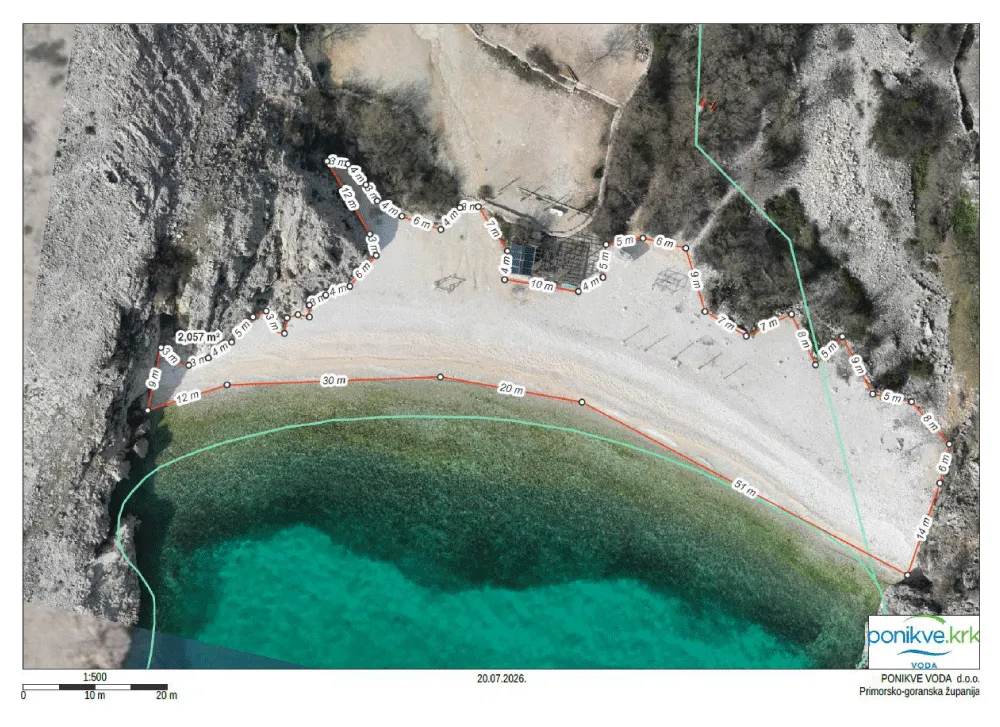
Monitoring surveys were conducted at Punta Debij and Zala using a standardised field protocol developed within the JOINABLE Project. Survey areas were georeferenced and documented using digital field records. Monitoring activities were performed under stable weather conditions during the project implementation period. Due to logistical constraints and the nature of volunteer clean-up actions, Redagara, Prniba and Voz were assessed as clean-up locations rather than fully standardised monitoring sites. Therefore, quantitative comparisons are primarily focused on Punta Debij and Zala (Figure 4, Table 2).
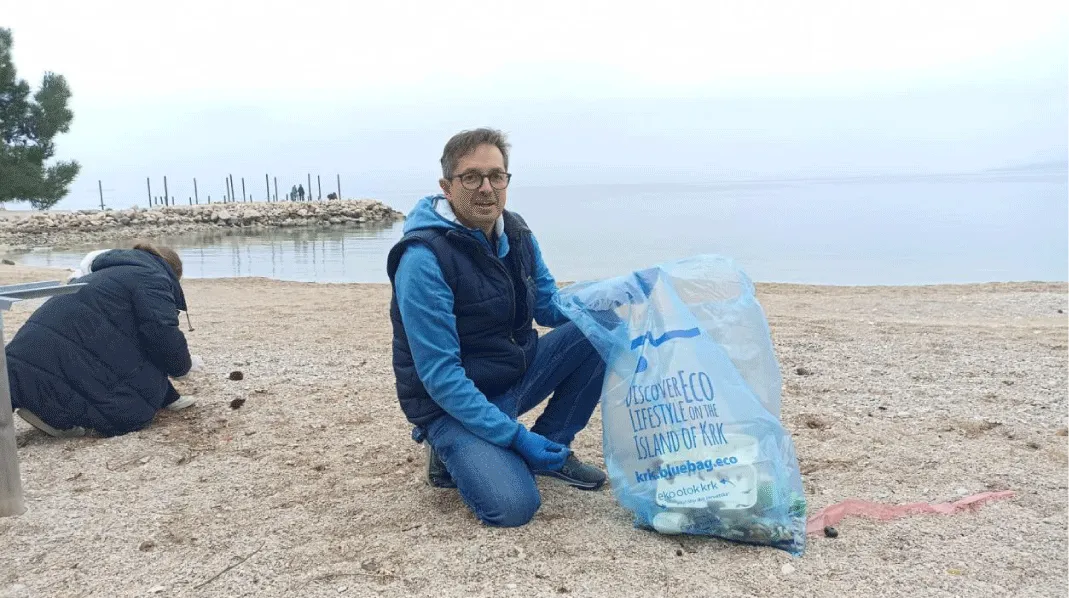
Environmental conditions differed slightly between monitoring locations. Monitoring at Punta Debij was conducted under calm weather conditions with negligible wind and calm sea state, while the Zala survey was carried out under moderate wind conditions (13.3 km/h), an average air temperature of 10 °C, relative humidity of 55%, and no recorded precipitation. These conditions were considered suitable for marine litter monitoring and did not significantly affect field observations.
Results
Punta Debij Beach
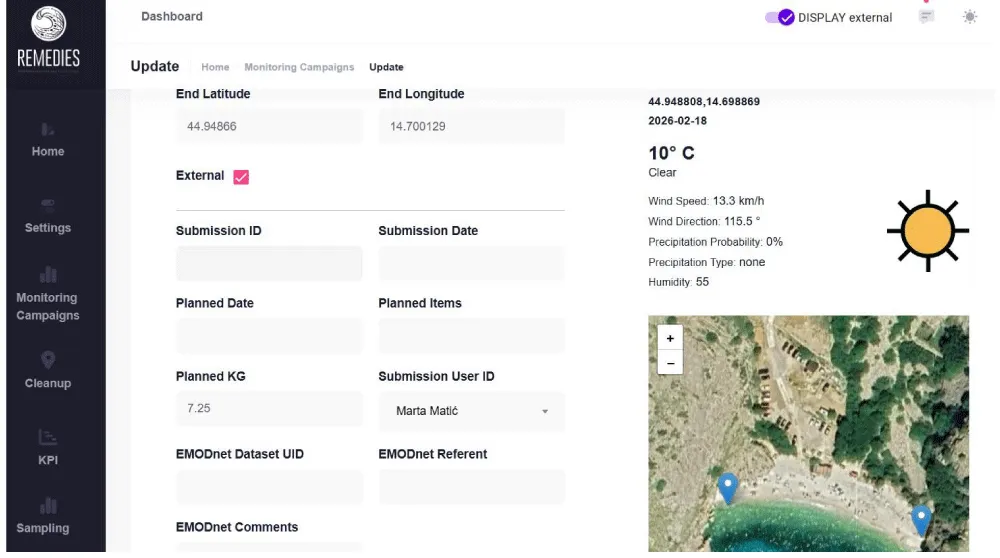
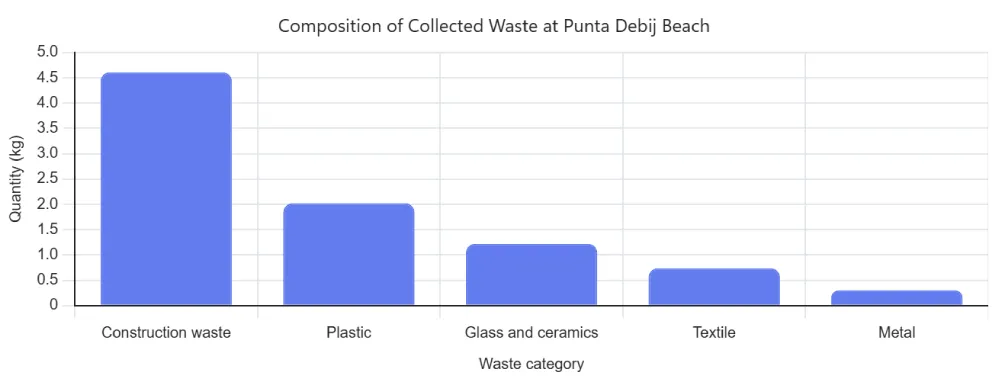
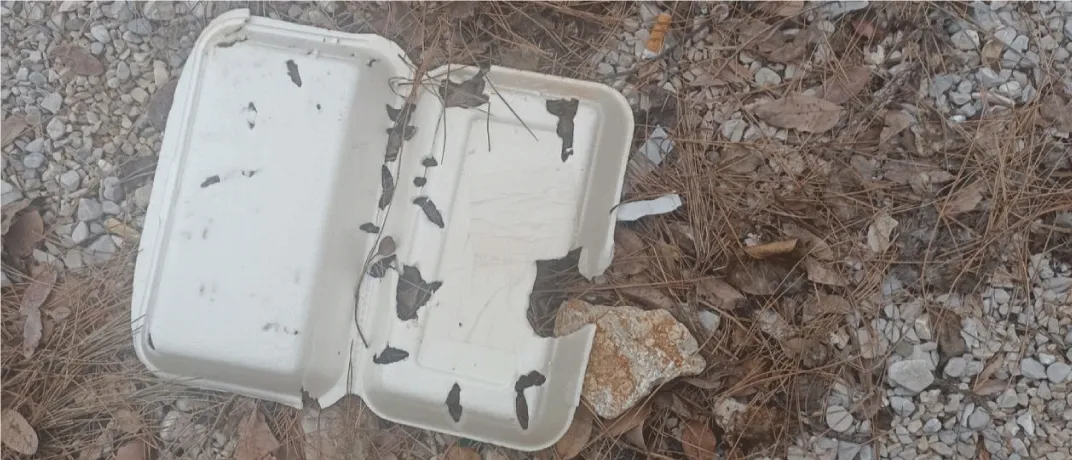
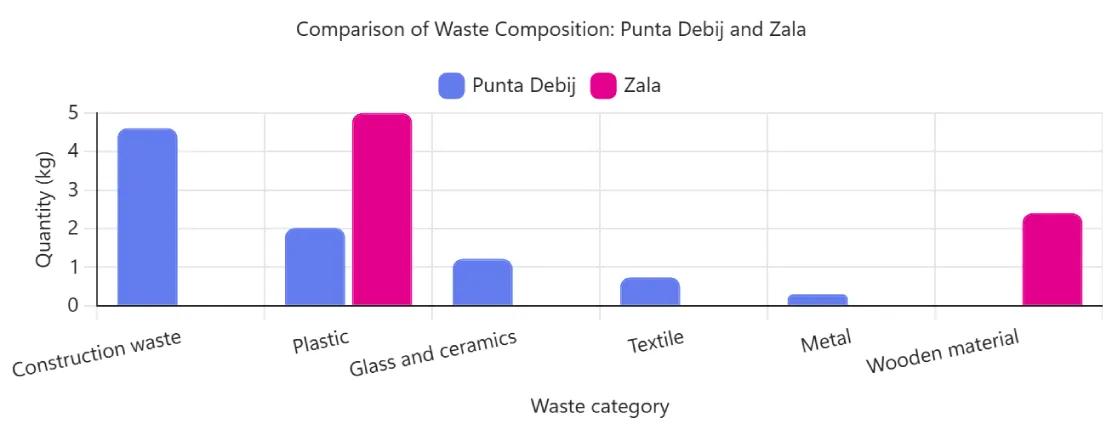
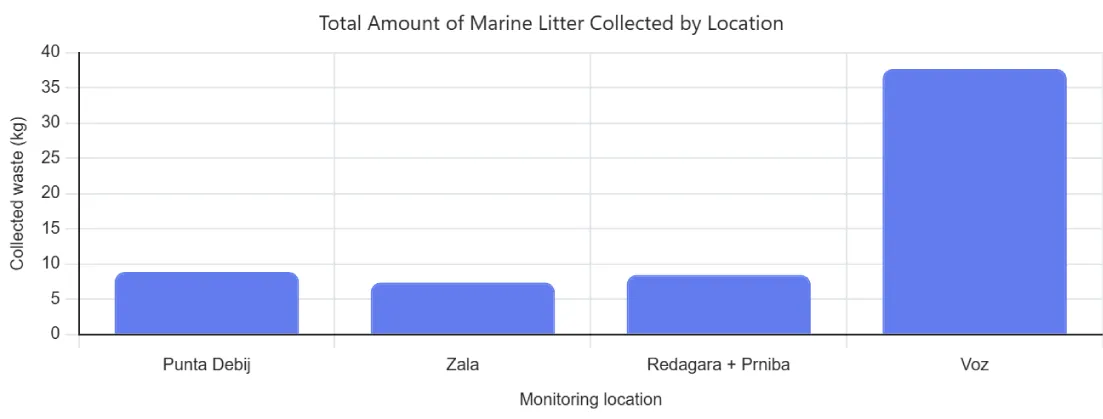
Monitoring conducted at Punta Debij revealed a significant presence of cigarette butts and single-use food packaging. The site also showed insufficient waste collection infrastructure, particularly regarding dedicated cigarette disposal facilities and covered waste bins. A total of 8.89 kg of waste was collected.
Construction-related materials represented the largest fraction during the monitoring period (Graph 1, Figure 5).
Zala beach
The remote beach of Zala displayed a significantly different litter profile. Collected waste consisted mainly of plastic material (5.0 kg) and driftwood (2.4 kg), which is consistent with marine transport and natural accumulation patterns commonly observed in less accessible coastal environments (Figure 6).
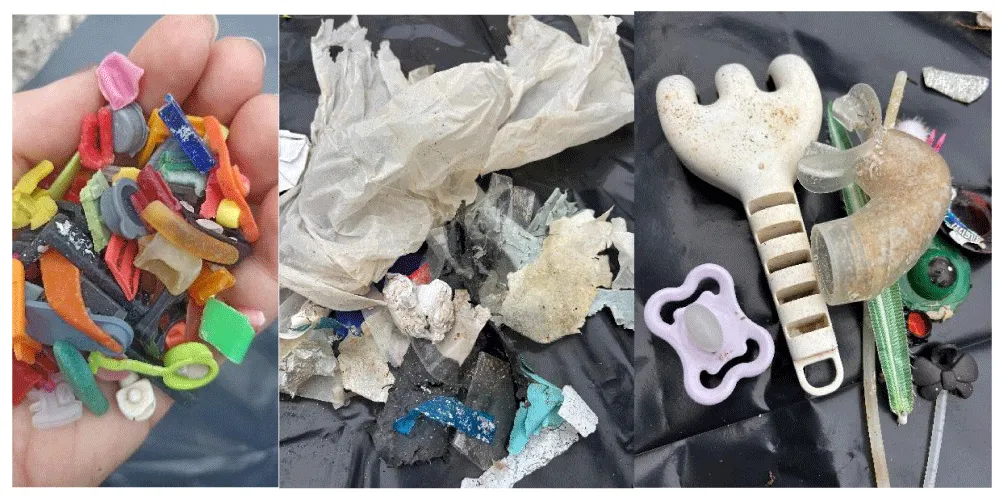
Plastic waste at both locations predominantly appeared in the form of small fragments, indicating an advanced process of secondary fragmentation. Such material structure significantly complicates sorting, treatment and recycling processes, as fragmented plastics often exhibit altered physical and chemical properties and increased susceptibility to contamination (Graph 2).
Redagara and prniba beaches
Monitoring and clean-up activities at Redagara and Prniba resulted in the collection of 8.47 kg of waste.
Several unusual objects were documented, including pulley components, mechanical parts, and plastic containers, indicating multiple potential sources of pollution.
Voz beach
The highest quantity of waste was recorded at Voz Beach beneath Krk Bridge. A total of 37.7 kg of waste was collected during a single clean-up action involving local volunteers.
Among the recovered items were umbrellas, a fire extinguisher, and other bulky objects, suggesting that part of the waste resulted from direct dumping rather than marine transport processes (Graph 3).
Quantitative comparison of litter density
To facilitate comparison with previous Adriatic studies, litter density was calculated for monitored sites using the surveyed beach area. Punta Debij exhibited a higher density of cigarette butts and consumer-related litter, while Zala showed a larger proportion of marine-transported plastic material and driftwood. These findings support the distinction between urban tourism-related litter and remote-site accumulation driven primarily by marine transport processes (Table 3).
Litter density calculations revealed notable differences between the two standardised monitoring locations. Although the total quantity of collected waste was similar, Zala exhibited a higher litter density (0.00360 kg/m²; 3.60 g/m²) compared to Punta Debij (0.00199 kg/m²; 1.99 g/m²). Litter density at Zala was approximately 1.8 times higher than at Punta Debij despite lower direct human use of the beach. This finding suggests a more concentrated accumulation of marine litter at the remote beach despite lower direct anthropogenic pressure, emphasising the importance of marine transport and local coastal morphology in litter accumulation processes.
Discussion
The results reveal significant differences between urban and remote coastal locations. Urban beaches such as Punta Debij were characterised by higher quantities of cigarette butts and consumer packaging waste, while remote locations showed larger proportions of marine-transported plastic debris.
The exceptionally high accumulation recorded at Voz may also be influenced by local geomorphological and hydrodynamic conditions. The presence of the Krk Bridge and the semi-enclosed coastal configuration may contribute to the retention of floating debris transported by currents and wind. However, further monitoring would be necessary to quantify the relative importance of these factors.
Similar accumulation patterns have been reported elsewhere in the Adriatic Sea. Fortibuoni et al. [4] identified plastics as the dominant component of marine litter along several Adriatic coastal locations, while Vlachogianni et al. [3] reported comparable trends across Mediterranean beaches. The predominance of plastic waste observed on Krk Island is therefore consistent with broader regional findings.
Visual assessment indicated that a substantial portion of plastic waste had undergone extensive degradation and secondary fragmentation. Such materials are particularly challenging to recover and recycle due to contamination and altered physical properties [5].
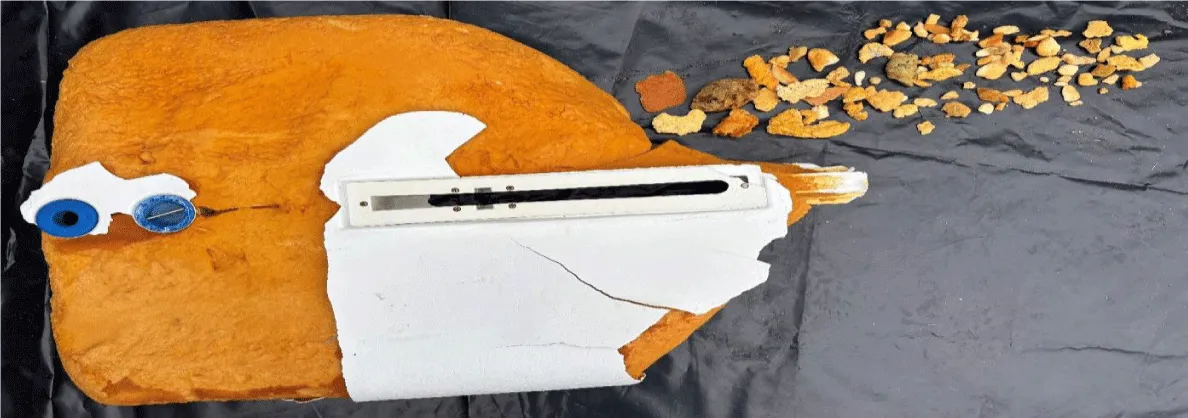
The widespread occurrence of cigarette butts is of particular concern. Cigarette filters are primarily composed of cellulose acetate and represent one of the most frequently encountered litter items in coastal environments worldwide [9]. Besides aesthetic impacts, cigarette butts release toxic compounds into marine ecosystems and contribute to microplastic pollution [10-14] (Figure 7).
Study limitations
This study has several limitations. Monitoring surveys were conducted during a limited time period and therefore do not capture seasonal variability. In addition, standardised monitoring was performed only at Punta Debij and Zala, while other locations were assessed through clean-up activities. Future studies should include seasonal monitoring campaigns and larger datasets to improve statistical robustness and regional comparability.
Due to the limited number of standardised monitoring sites and the absence of replicated sampling events, inferential statistical testing was not applied. Instead, quantitative descriptive analysis and litter-density calculations were used to facilitate comparison between monitoring locations.
Implications for circular economy and coastal management
The findings highlight important opportunities for integrating marine litter management within circular economy frameworks.
Particular attention should be given to the separate collection of cigarette butts. Recent studies demonstrate that cellulose acetate recovered from cigarette filters can be processed and reused as a secondary raw material for the production of new products such as eyewear frames and composite materials [11].
Based on field observations, the following measures are recommended:
- installation of additional waste collection bins;
- introduction of dedicated cigarette butt collection systems;
- distribution of portable ashtrays on beaches;
- continued digital monitoring of marine litter;
- development of pilot projects for recycling collected plastics and cigarette filters;
- stronger public awareness campaigns targeting beach visitors.
The implementation of such measures could support a transition from traditional clean-up approaches toward more sustainable circular economy models within coastal communities.
Within the framework of the JOINABLE Project and local circular-economy initiatives on Krk Island, collected plastic waste may represent a valuable secondary resource. Practical examples already implemented include awareness campaigns, separate collection systems and educational activities promoting recycling and responsible consumption. Further opportunities include the production of educational products, promotional items and reusable materials manufactured from recycled plastics recovered during coastal clean-up actions.
A preliminary assessment suggests that installation of dedicated cigarette-butt collection bins at Punta Debij could significantly reduce litter accumulation. Such measures would require limited investment while potentially reducing clean-up costs and environmental impacts associated with cigarette-filter pollution.
Conclusions
Monitoring activities conducted on the coastal areas of Krk Island confirmed that plastic waste remains the dominant category of marine litter, while cigarette butts represent one of the most problematic individual waste streams.
Differences observed between urban and remote beaches indicate the combined influence of local waste generation and marine transport processes. Additionally, high levels of plastic degradation and fragmentation significantly reduce recycling potential and increase environmental risks.
The study demonstrates the importance of continuous monitoring programs, targeted waste prevention measures, and the development of innovative circular economy solutions. Such approaches can contribute significantly to reducing marine litter accumulation and improving environmental quality in Adriatic coastal regions.
Acknowledgements
The author would like to thank the Municipality of Punat, local volunteers, and all stakeholders involved in marine litter monitoring and clean-up activities.
This study was conducted within the Interreg IPA ADRION JOINABLE Project, which supports innovative solutions for marine litter monitoring, circular economy development, and sustainable coastal management in the Adriatic-Ionian region.
- Galgani F, Hanke G, Werner S, De Vrees L. Marine litter within the European Marine Strategy Framework Directive. ICES J Mar Sci. 2013;70(6):1055-1064. Available from: https://doi.org/10.1093/icesjms/fst122
- Jambeck JR, Geyer R, Wilcox C, Siegler TR, Perryman M, Andrady A, et al. Plastic waste inputs from land into the ocean. Science. 2015;347(6223):768-771. Available from: https://doi.org/10.1126/science.1260352
- Vlachogianni T, Fortibuoni T, Ronchi F, Zeri C, Mazziotti C, Tutman P, et al. Marine litter assessment in the Mediterranean. Mar Pollut Bull. 2018;129(2):488-498.
- Fortibuoni T, Amadesi B, Vlachogianni T. Composition and abundance of macrolitter on Adriatic beaches. Mar Pollut Bull. 2021;167:112327.
- Barnes DKA, Galgani F, Thompson RC, Barlaz M. Accumulation and fragmentation of plastic debris in global environments. Philos Trans R Soc B Biol Sci. 2009;364(1526):1985-1998. Available from: https://doi.org/10.1098/rstb.2008.0205
- Thompson RC, Olsen Y, Mitchell RP, Davis A, Rowland SJ, John AWG, et al. Lost at sea: where is all the plastic? Science. 2004;304(5672):838. Available from: https://doi.org/10.1126/science.1094559
- Cheshire AC, Adler E, Barbière J, Cohen Y, Evans S, Jarayabhand S, et al. UNEP/IOC guidelines on survey and monitoring of marine litter. Nairobi: United Nations Environment Programme; 2009. Available from: https://www.researchgate.net/publication/256186638_UNEPIOC_Guidelines_on_Survey_and_Monitoring_of_Marine_Litter
- European Commission. Guidance on the monitoring of marine litter in European seas under the Marine Strategy Framework Directive. Brussels: European Commission; 2023. Available from: https://www.researchgate.net/profile/Tomaso-Fortibuoni/publication/376456717_Guidance_on_the_Monitoring_of_Marine_Litter_in_European_Seas/links/65796d05fc4b416622bf8b66/Guidance-on-the-Monitoring-of-Marine-Litter-in-European-Seas.pdf
- Novotny TE, Lum K, Smith E, Wang V, Barnes R. Cigarette butts and the case for an environmental policy on hazardous cigarette waste. Int J Environ Res Public Health. 2009;6(5):1691-1705. Available from: https://doi.org/10.3390/ijerph6051691
- Belzagui F, Buscio V, Gutiérrez-Bouzán C, Vilaseca M. Cigarette butts as a microfiber pollution source. Sci Total Environ. 2021;762:143130.
- Belzagui F, Buscio V, Gutiérrez-Bouzán C, Vilaseca M. A clean process for obtaining high-quality cellulose acetate from cigarette butts. Materials (Basel). 2020;13(21):4710. Available from: https://doi.org/10.3390/ma13214710
- Matić-Skoko S, Stagličić N, Tutman P, Grgičević R, Pallaoro A, Bojanić N, et al. Marine litter in the Croatian Adriatic: composition, distribution and environmental implications. Environ Sci Pollut Res Int. 2020.
- OSPAR Commission. Guideline for monitoring marine litter on the beaches in the OSPAR maritime area. London: OSPAR Commission; 2021.
- Renewable Carbon Initiative. Recycling cigarette butts for use in acetate glasses: a circular economy approach to cigarette waste valorisation. Renewable Carbon News. 2024.


 Save to Mendeley
Article Alerts
Subscribe to our articles alerts and stay tuned.
 This work is licensed under a Creative Commons Attribution 4.0 International License.